Homemade Goat Milk Kefir Recipe
If you’ve ever looked for a natural way to boost digestion, strengthen immunity, and improve overall gut health, chances are you’ve heard about kefir. This fermented dairy drink has been around for centuries, often called the “champagne of milk” because of its slightly fizzy, tangy taste. While most people try kefir made from cow’s milk, goat milk kefir has been quietly gaining attention for being creamier, easier to digest, and loaded with probiotics.
When I first started making kefir at home, I was intimidated. It seemed like something only seasoned fermenters could pull off. But after trying goat milk kefir for the first time, I realized how simple—and rewarding—the process really is. All it takes is milk, kefir grains, and a little patience. In this post, I’ll Walk you through exactly how to make it, why it’s worth the effort, and how you can easily incorporate it into your daily routine.
Why You’ll Love This Goat Milk Kefir Recipe
There are countless reasons to fall in love with this recipe, but here are a few that stand out:
- Goat milk kefir is easier to digest than cow milk kefir because of its smaller fat globules and naturally lower lactose content.
- It’s one of the most affordable ways to get a daily dose of probiotics without relying on supplements.
- The flavor is tangy yet smooth, making it versatile enough to drink plain, blend into smoothies, or even use as a base for dressings and baked goods.
- Once you buy kefir grains, they can last for years if cared for properly, which means endless batches of probiotic-rich kefir.
Goat Milk Kefir Recipe
Recipe at a Glance
| Prep Time | Fermentation Time | Total Time | Servings | Cuisine | Difficulty |
|---|---|---|---|---|---|
| 5 minutes | 18–24 hours | ~24 hours | 4 cups | Fermented, Probiotic | Easy |
Equipment – Amazon’s Best Sellers
- Glass mason jar (1-quart)
- Plastic or nylon strainer (avoid metal)
- Wooden or silicone spoon
- Cheesecloth or breathable lid
Recipe Ingredients
| Ingredient | Quantity | Notes |
|---|---|---|
| Fresh goat milk | 4 cups (1 liter) | Raw or pasteurized, but not ultra-pasteurized |
| Kefir grains | 1–2 tbsp | Active milk kefir grains |
Ingredient Tips & Substitutes
- Raw goat milk provides a richer probiotic profile, but pasteurized goat milk works too.
- Ferment longer if you want a tangier, more lactose-friendly kefir.
- Ultra-pasteurized milk should be avoided, as it won’t culture properly.
Recipe Instructions
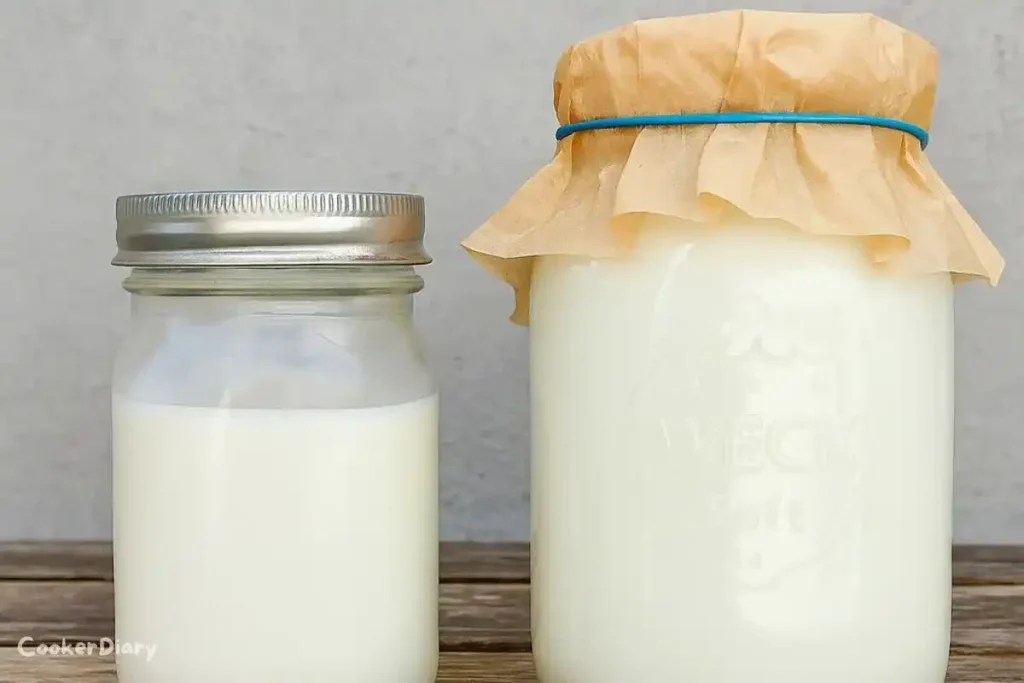
- Place kefir grains into a clean glass jar.
- Pour goat milk over the grains, leaving about an inch of space at the top.
- Loosely cover the jar with cheesecloth or a clean paper towel, then secure it with a rubber band.
- Let it ferment at room temperature (65–75°F or 18–24°C) for 18–24 hours.
- Strain the fermented milk with a plastic or nylon strainer, transferring the kefir into a clean container. The liquid collected is your kefir.
- Refrigerate and enjoy for up to 7–10 days. Save the grains to start your next batch.
Chef’s Tips and Variations
- For a second fermentation, add fruit or herbs (like lemon peel or mint) after straining. This boosts probiotic activity and improves flavor.
- If your kitchen is cold, fermentation may take longer. Place the jar in a warmer spot but away from direct sunlight.
- A shorter fermentation makes the kefir creamier, while a longer one develops a tangier, more effervescent flavor.
- For dairy-sensitive readers, coconut or almond milk can be used, though results may vary compared to goat milk.
More smoothie drink recipes:
- Kefir Milk Smoothie Recipe
- Blueberry Protein Powder Smoothie Recipe
- Turmeric Smoothie with Milk Bowl Recipe
Nutrition Information
| Calories | Protein | Fat | Carbs | Probiotics | Calcium |
|---|---|---|---|---|---|
| 120 | 8g | 6g | 9g | High | 25% DV |
Nutritional values are approximate and may vary depending on the milk used and fermentation length.
FAQs About Goat Milk Kefir Recipe
Q1: Is goat milk kefir easier to digest than cow milk kefir?
Yes. Goat milk has smaller fat globules and less lactose, making it gentler on the digestive system.
Q2: Can I use store-bought pasteurized goat milk?
Absolutely, but avoid ultra-pasteurized varieties since they don’t ferment well.
Q3: How long does homemade goat milk kefir last?
When refrigerated, it remains fresh for 7–10 days.
Q4: What does goat milk kefir taste like?
It has a tangy, slightly sour, creamy taste with a hint of natural fizz.
Q5: Do I need new kefir grains for every batch?
No. Kefir grains are reusable and can last for years if cared for properly.
Final Thoughts on Homemade Goat Milk Kefir
Making goat milk kefir at home is more than just a recipe—it’s a step toward better health and a connection to a centuries-old tradition. With minimal equipment and ingredients, you can create a drink that’s naturally probiotic, highly nutritious, and customizable to your taste.
When I started making my first batch, I worried it wouldn’t turn out right. But with a little trial and error, it became one of the easiest, most rewarding kitchen habits I’ve ever picked up. For anyone new to fermentation, this goat milk kefir recipe offers an easy and delicious way to add probiotics to your daily routine.
Nutrition Disclaimer: Nutritional values are estimates and may vary depending on the ingredients used.
Affiliate Disclaimer: This post contains Amazon affiliate links, which means I may earn a small commission if you make a purchase—without any added cost to you.