
Best Ugadi Pachadi Recipe

Ugadi Pachadi recipe is a meaningful and symbolic dish prepared during the Ugadi festival, which marks the Hindu New Year in Andhra Pradesh and Telangana. This traditional preparation beautifully combines six distinct flavors that represent the different emotions of life. Growing up, many families eagerly wait to taste this special festive chutney because it carries cultural importance and nostalgic memories.
This dish reflects the philosophy that life brings sweetness, bitterness, happiness, and challenges. Therefore, Ugadi Pachadi is not just food but also a reminder to accept life’s journey with balance. In addition, the recipe is surprisingly simple and uses fresh seasonal ingredients. If you are planning to celebrate Ugadi or explore authentic South Indian cuisine, this recipe will guide you step-by-step.
What is Ugadi Pachadi?
The Symbolism of Six Tastes
Ugadi Pachadi is not just a dish; it is a reflection of life’s journey. Each ingredient represents an aspect of human emotions:
- Sweet (Jaggery): Symbolizes happiness and pleasant experiences.
- Sour (Tamarind): Represents challenges and hardships.
- Bitter (Neem Flowers): Stands for sadness and difficulties.
- Spicy (Chili Powder): Signifies surprises and excitement.
- Salty (Salt): Represents the essentials of life.
- Tangy (Raw Mango): Depicts unexpected twists and turns.
This combination reminds us to embrace life’s experiences with gratitude and balance.
Preparing Ugadi Pachadi – A Sacred Morning Ritual
Ugadi Pachadi holds a special place in Telugu and Kannada traditions. It is more than just a dish; it symbolizes the community’s way of welcoming the new year. Families prepare it early in the morning, often as the first thing on Ugadi day. This preparation is part of the larger rituals that mark the festival’s beginning. Loved ones gather at home, sharing the joy of a fresh start.
As the dish is being made, another important tradition takes place: Panchanga Sravanam. During this ceremony, a priest or elder reads the astrological predictions for the coming year. These forecasts offer insight into future events and provide guidance on how to navigate challenges. It is a way to reflect on time’s cyclical nature and to embrace the future with hope and positivity.
The Deeper Meaning Behind Ugadi Pachadi
After Panchanga Sravanam, families come together to partake in Ugadi Pachadi. Eating this dish early in the morning is not just about the flavors; it is about accepting life in its entirety. The six tastes—sweet, sour, bitter, salty, spicy, and tangy—represent different emotions and experiences people will face in the coming year. By consuming it, individuals symbolically accept both joys and hardships with an open heart.
This tradition fosters a sense of unity and connection to cultural heritage. It is a moment of reflection, reminding everyone of life’s impermanence and the importance of gratitude. The act of sharing Ugadi Pachadi strengthens family bonds and reinforces the values of togetherness, acceptance, and resilience.
Why This Ugadi Pachadi Recipe Works
- Uses authentic and traditional Andhra and Telangana ingredients
- Maintains the perfect balance of the six symbolic tastes
- Requires minimal cooking and preparation time
- Uses seasonal and naturally nutritious ingredients
- Preserves cultural and spiritual significance
- Suitable for beginners and experienced cooks alike
- Allows easy customization based on taste preference
Ugadi Pachadi Recipe
Recipe at a Glance
| Prep Time | Cook Time | Total Time | Servings | Cuisine | Difficulty |
|---|---|---|---|---|---|
| 15 minutes | 5 minutes | 20 minutes | 4 servings | South Indian | Easy |
Equipment: Amazon’s Overall Picks
- Mixing bowl
- Measuring cups and spoons
- Small saucepan
- Wooden spoon
- Sharp knife
- Cutting board
- Serving bowl

Present your Ugadi Pachadi beautifully with the Lipper International Acacia Round Flair Bowl. Made from durable acacia wood, it adds a warm, rustic touch to any table and is perfect for serving chutneys, salads, and snacks.
As an Amazon Associate, I earn from qualifying purchases, at no additional cost to you.
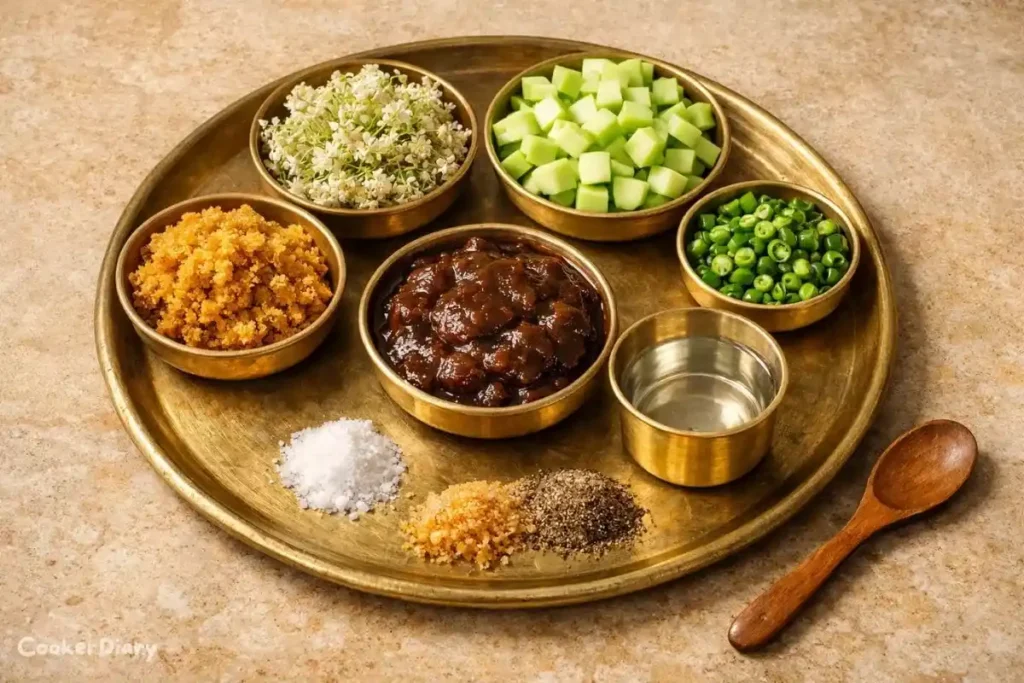
Ugadi Pachadi Ingredients
| Ingredient | Quantity |
|---|---|
| Fresh neem flowers | 1 tablespoon |
| Raw mango (finely chopped) | ½ cup |
| Jaggery (grated) | ¼ cup |
| Tamarind pulp | 2 tablespoons |
| Water | ½ cup |
| Green chili (finely chopped) | 1 |
| Salt | ¼ teaspoon |
| Black pepper powder (optional) | ¼ teaspoon |
Ingredient Tips or Substitutes
- Dried neem flowers can replace fresh ones when unavailable
- Brown sugar may substitute jaggery, however jaggery gives authentic flavor
- Lemon juice can replace tamarind pulp if required
- Mild chilies can be used for less spice
- Slightly ripe mango can provide balanced sweetness
Recipe Instructions
- Soak tamarind in warm water for about 10 minutes. Afterward, extract thick pulp and discard fibers.
- Take a mixing bowl and combine tamarind pulp with water. Stir well to create a smooth base.
- Add grated jaggery to the mixture. Continue stirring until the jaggery dissolves completely.
- Add finely chopped raw mango pieces. These provide tangy flavor and texture.
- Gently add fresh neem flowers. Stir carefully to distribute evenly.
- Add chopped green chili, salt, and black pepper powder. Mix thoroughly.
- Taste the mixture and adjust sweetness or sourness if necessary.
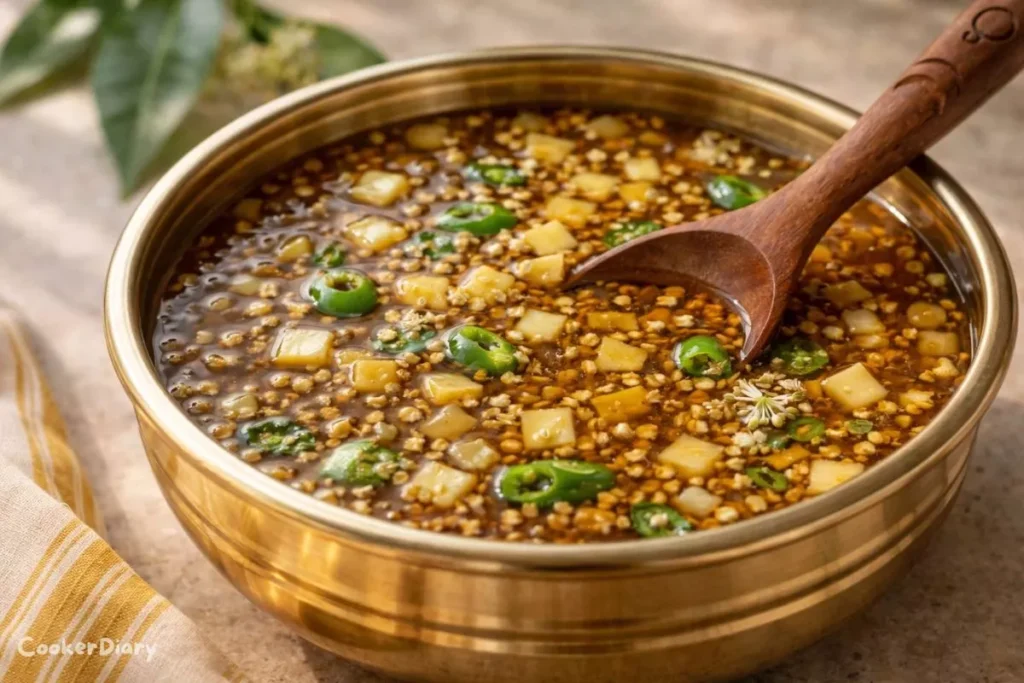
- Transfer to a serving bowl and serve fresh as Ugadi prasad.

Chef’s Tips and Variations
- Always choose fresh seasonal mango for authentic taste
- Strain tamarind pulp to avoid unwanted fibers
- Lightly crush neem flowers to enhance aroma
- Adjust jaggery depending on mango sourness
- Add soaked dates for additional natural sweetness
- Refrigerate slightly before serving for refreshing taste
- Use clay or earthen bowls for traditional presentation
- Avoid long storage as freshness enhances flavor
- Add roasted cumin powder for mild earthy flavor variation
Nutrition Information
| Nutrient | Amount Per Serving |
|---|---|
| Calories | 95 kcal |
| Carbohydrates | 22 g |
| Protein | 1 g |
| Fat | 0.3 g |
| Fiber | 2 g |
| Sugar | 17 g |
| Sodium | 120 mg |
| Vitamin C | 18% DV |
| Iron | 4% DV |
FAQs
The six symbolic flavors are: sweet (jaggery), sour (tamarind), salty (salt), bitter (neem), spicy (green chili), and astringent (raw mango). This combination represents life’s varied experiences.
A basic pachadi includes yogurt or buttermilk as a base, mixed with a paste of coconut, green chilies, and ginger. It is tempered with mustard seeds, curry leaves, and dried chilies fried in oil.
Ugadi traditionally celebrates six tastes (sad-rasa) in its Pachadi: sweet, sour, salty, bitter, spicy, and astringent. These embody life’s holistic experiences.
Prepare Ugadi Pachadi, Pulihora (tamarind rice), Bobbatlu (sweet flatbread), and other regional specialties like Mango Rice. Festive meals often include a variety of flavorful vegetarian dishes.
A Dish That Celebrates Life and Tradition
Ugadi Pachadi represents more than a festive recipe because it symbolizes cultural heritage and emotional balance. Many families prepare this dish together, which strengthens traditions and creates lasting memories. In addition, serving Ugadi Pachadi during the Hindu New Year encourages reflection and positivity.
CookerDiary participates in affiliate marketing programs, which means we may earn commissions from qualifying purchases through Amazon links at no additional cost to readers. Nutrition values provided are estimates and may vary depending on ingredients, portion sizes, and preparation methods.