
Easy Coconut Sticky Rice Recipe – Just Like in Thailand!

Coconut Sticky Rice is the creamy, dreamy dish that turns simple rice into something truly special. If you’ve ever visited a Thai night market, you’ve probably watched vendors ladle warm coconut sauce over pillowy mounds of sticky rice, and the smell alone was enough to stop you in your tracks. Fortunately, you don’t need a plane ticket to Bangkok to enjoy it. In fact, this recipe brings that same sweet, silky, coconutty goodness straight to your kitchen using just a handful of ingredients. Whether you plan to serve it alongside fresh mango, as a cozy dessert, or as a side dish for grilled meats, this coconut sticky rice recipe is simple enough for beginners yet authentic enough to impress guests. So, grab your rice and let’s get cooking.
Related: Mango Sticky Rice Recipe
Why This Coconut Sticky Rice Recipe Works
This coconut sticky rice recipe stands out because it captures the real texture and flavor of the Thai original without requiring fancy equipment or hard-to-find ingredients. In addition, it’s flexible enough to fit sweet or savory menus, which makes it a genuinely useful recipe to keep in your back pocket. Here’s why people keep coming back to it:
- Naturally sweet and creamy: The coconut milk sauce soaks into every grain, so you get rich flavor in every bite.
- Only 6 core ingredients: No long grocery list, no confusing steps.
- Naturally gluten-free and dairy-free: It fits many diets without any substitutions needed.
- Versatile: Serve it with mango for dessert, or alongside grilled chicken or fish for a savory Thai-style side.
- Make-ahead friendly: You can prepare it in advance and reheat with a splash of coconut milk.
- Authentic texture: Steaming (rather than boiling) keeps the rice chewy and glossy, just like the version served in Thailand.
Must-Have Recipe Equipment
- Bamboo steamer basket or a fine-mesh metal steamer
- Large pot (to hold water beneath the steamer)
- Cheesecloth or a thin cotton cloth
- Mixing bowls
- Small saucepan (for the coconut sauce)
- Wooden spoon or rice paddle
- Measuring cups and spoons
- Airtight container (for soaking and storing leftovers)

- Fits Any Pot Or Wok You Already Own — The included stainless steel ring adapter locks this basket onto 8–12 inch pots an…
- The Reason Restaurant Dim Sum Looks Better — 3.5 inches of clearance per tier, not the standard 2 inches. Soup dumplings…
- Bamboo Breathes — Metal Cannot — Handwoven Moso bamboo absorbs excess steam so dumplings stay tender, never waterlogged….
*cookerdiary may earn a small commission from qualifying purchases made through Amazon affiliate links included in this post, at no extra cost to you. Thank you for supporting our blog.
The Story Behind Authentic Coconut Sticky Rice

Coconut sticky rice, known in Thailand as “khao niew,” has been a staple across Southeast Asia for centuries, particularly in Thailand, Laos, and parts of Cambodia. Traditionally, this coconut sticky rice recipe was cooked over an open flame using bamboo baskets, a method that allowed steam to circulate evenly through the rice without making it mushy. As a result, the rice developed its signature chewy, slightly sticky texture rather than turning soft like regular white rice.
Historically, sticky rice was considered a staple grain, similar to how many Western cultures view bread. However, over time, cooks began pairing it with sweetened coconut milk to create desserts, and today it’s most famously enjoyed with fresh mango as “khao niew mamuang.” On the other hand, plain coconut sticky rice is just as popular as a side dish for savory meals like grilled meats or spicy salads, since its subtle sweetness balances out bold, spicy flavors beautifully.
One common question people ask is whether regular rice can replace sticky rice in this recipe. Unfortunately, the answer is no. Sticky rice, also called glutinous rice, contains a different starch structure than jasmine or long-grain rice, which is exactly what gives this dish its signature chew and stickiness. Therefore, it’s worth seeking out authentic Thai sticky rice at an Asian grocery store or online for the best results.
Related: Chinese Kitchen: Essential Spices and Sauces
Do I need to soak the rice overnight?
Yes, soaking is a crucial step in this recipe. Ideally, you should soak the sticky rice for at least 4 hours, though overnight soaking (6 to 8 hours) produces the best results. This process softens the grains and allows them to steam evenly, so you avoid the dreaded outcome of rice that’s hard in the center and mushy on the outside. If you’re short on time, a quick-soak method using hot water for 1 to 2 hours can work, but the texture may be slightly less consistent.
Can I make coconut sticky rice without a bamboo steamer?
Absolutely. While a bamboo steamer is traditional and helps circulate steam evenly, you can easily use a metal steamer basket lined with cheesecloth instead. Additionally, some home cooks use a rice cooker with a steam setting or even a microwave-safe bowl with a damp cloth, checking frequently to avoid overcooking. The key point to remember is that sticky rice should be steamed, not boiled, since boiling turns it into a gluey, overly soft texture.
How do I store and reheat leftover coconut sticky rice?
Leftover coconut sticky rice can be stored in an airtight container in the refrigerator for up to 3 days. However, since coconut rice tends to firm up once chilled, it’s best to reheat it gently. Simply sprinkle a tablespoon of water or coconut milk over the rice, then steam it for 5 to 10 minutes, or microwave it covered in 30-second intervals while stirring. This restores much of the original soft, creamy texture, though freshly made rice will always taste best.
Best Ways to Serve Coconut Sticky Rice

Coconut sticky rice pairs well with a variety of fruits and toppings. Here are some delicious serving ideas:
- Serve with Fresh Mango – The classic pairing. Top the sticky rice with ripe, sweet mango slices for a refreshing and naturally sweet dessert.
- Present on Banana Leaves – Serve the rice on fresh banana leaves for an authentic presentation and a subtle earthy aroma.
- Drizzle with Coconut Milk – Pour a little warm, sweetened coconut milk over the rice to make it even richer and creamier.
- Sprinkle with Toasted Sesame Seeds – Add toasted white or black sesame seeds for a light crunch and nutty flavor.
- Top with Crispy Mung Beans – Roasted or fried mung beans provide a traditional crunchy topping that complements the soft rice.
- Add Chopped Nuts – Garnish with chopped peanuts, cashews, or almonds for extra texture and flavor.
- Pair with Other Tropical Fruits – Try serving coconut sticky rice with pineapple, papaya, jackfruit, or fresh berries for a delicious twist on the classic recipe.
Tips and Variations for Coconut Sticky Rice

- Adjust the Sweetness – Add more or less sugar to suit your taste. Start with the recommended amount, then adjust after tasting the coconut sauce.
- Use Pandan Leaves – Steam the rice or simmer the coconut milk with a few tied pandan leaves to give the dish a fragrant, authentic Thai flavor.
- Enjoy as a Side Dish – Serve coconut sticky rice alongside grilled chicken, pork, seafood, or stir-fried dishes for a delicious sweet-and-savory combination.
- Try Different Toppings – Customize your sticky rice with toasted sesame seeds, crispy mung beans, shredded coconut, or chopped nuts for added texture.
- Serve with Different Fruits – While mango is the traditional choice, coconut sticky rice also tastes great with pineapple, bananas, papaya, or fresh berries.
- Add Extra Coconut Sauce – Reserve some sweetened coconut milk for drizzling over the rice just before serving for extra richness and moisture.
Frequently Asked Questions
Sticky rice and coconut rice are different in both the type of rice used and the way they are prepared. Sticky rice is made with glutinous (sweet) rice, a short-grain variety that is high in amylopectin starch. It is soaked for several hours and then steamed, giving it a chewy, sticky texture with a mild flavor. Coconut rice, on the other hand, is usually made with long-grain rice such as jasmine rice that is cooked directly in coconut milk. This creates a fluffy, creamy rice with a rich coconut flavor that is often served as a savory side dish.
Both coconut cream and coconut milk work well for making sticky rice, but they produce slightly different results. Coconut cream is thicker and richer, making it an excellent choice if you want a more luxurious dessert or a thicker coconut sauce. Coconut milk is lighter and is the traditional option used in many recipes, providing plenty of creaminess without being too heavy. Whichever you choose, avoid using cream of coconut, as it contains added sugar and is intended for cocktails and desserts rather than cooking.
The secret to perfect sticky rice is using the proper soaking and steaming method. Always choose glutinous rice, also labeled as sweet rice or sticky rice, since regular rice varieties will not develop the same chewy texture. Soak the rice in water for at least 4 hours, though soaking it overnight produces the best results. After soaking, drain the rice and steam it instead of boiling it. Steaming for about 15 to 20 minutes allows the grains to become tender, glossy, and perfectly sticky without turning mushy.
Nutrition Values (per serving, estimated):
Calories: 320 kcal | Carbohydrates: 52g | Protein: 4g | Fat: 11g | Saturated Fat: 9g | Sodium: 240mg | Fiber: 2g | Sugar: 14g
*Nutrition values provided in this post are estimates only and may vary depending on specific brands and ingredient substitutions used. This information should not be considered a substitute for advice from a registered dietitian or medical professional.
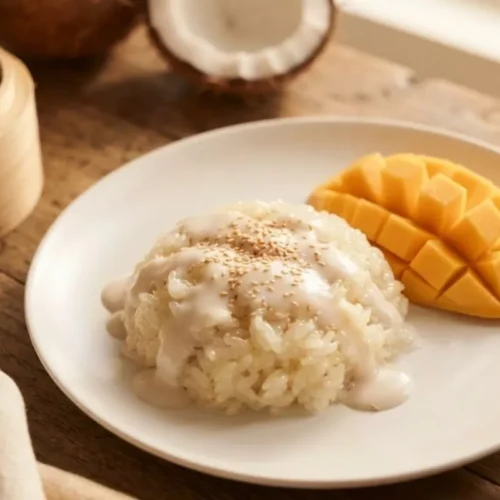
Coconut Sticky Rice Recipe
Equipment
- Bamboo steamer basket Or use a metal steamer lined with cheesecloth
- Large pot Should be wide enough to hold the steamer basket
- piece Cheesecloth Use if steaming with a metal basket
- Small saucepan For preparing the coconut sauce
- Wooden spoon For stirring rice and sauce
- A set Measuring cups and spoons For accurate ingredient portions
- Airtight container For soaking rice and storing leftovers
Ingredients
- 2 cups Thai glutinous (sticky) rice Rinsed and soaked 6-8 hours
- 1 ¾ cups Coconut milk (full-fat) Divided for cooking and sauce
- ½ cup White sugar Divided; adjust to taste
- ¾ tsp Salt Divided for rice and sauce
- 2 leaves Pandan leaves (optional) Tied in a knot, for fragrance
- 1 tbsp Toasted sesame seeds or mung beans For garnish
- 1 cup Fresh mango, sliced (optional) For serving as dessert
Instructions
- Soak the rice: Rinse the sticky rice under cold water 3 to 4 times until the water runs mostly clear. Then, place it in a bowl, cover with water, and soak for at least 6 hours or overnight.
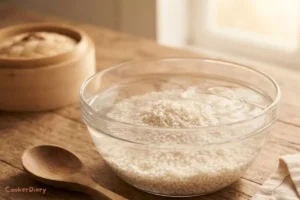
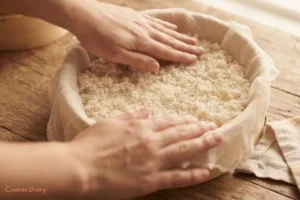
- Prepare the steamer: Drain the soaked rice thoroughly. Line your bamboo steamer or metal basket with cheesecloth, then spread the rice evenly across it, making sure not to pile it too thick in the center.
- Steam the rice: Bring water to a boil in a large pot, then place the steamer basket on top, ensuring the water doesn't touch the rice directly. Cover and steam for 20 to 25 minutes, flipping the rice halfway through, until the grains turn soft and translucent.

- Make the coconut sauce: While the rice steams, combine 1 cup of coconut milk, 1/4 cup of sugar, and 1/2 teaspoon of salt in a small saucepan. Warm over low heat, stirring frequently, until the sugar dissolves completely. Do not let it boil.

- Combine rice and sauce: Transfer the hot steamed rice into a large bowl. Pour two-thirds of the warm coconut sauce over it, then stir gently to combine. Cover the bowl and let it rest for 15 to 20 minutes so the rice absorbs the liquid.

- Prepare the topping sauce: In the same saucepan, combine the remaining coconut milk, sugar, and salt. Heat gently until slightly thickened, then set aside to drizzle over individual servings.

- Serve: Scoop the coconut sticky rice into serving bowls or plates. Drizzle with the reserved topping sauce, sprinkle with toasted sesame seeds or mung beans, and add fresh mango slices if desired. Serve warm.

Video
Notes
- Full-fat canned coconut milk works best for authentic creaminess; light coconut milk will result in a thinner sauce.
- If pandan leaves aren’t available, they can be omitted without significantly affecting the flavor.
- This recipe can easily be doubled for larger gatherings, though steaming time may need to increase slightly.
- Leftover coconut sauce can be stored separately in the fridge for up to 5 days.