Homemade Candied Orange Peel Recipe
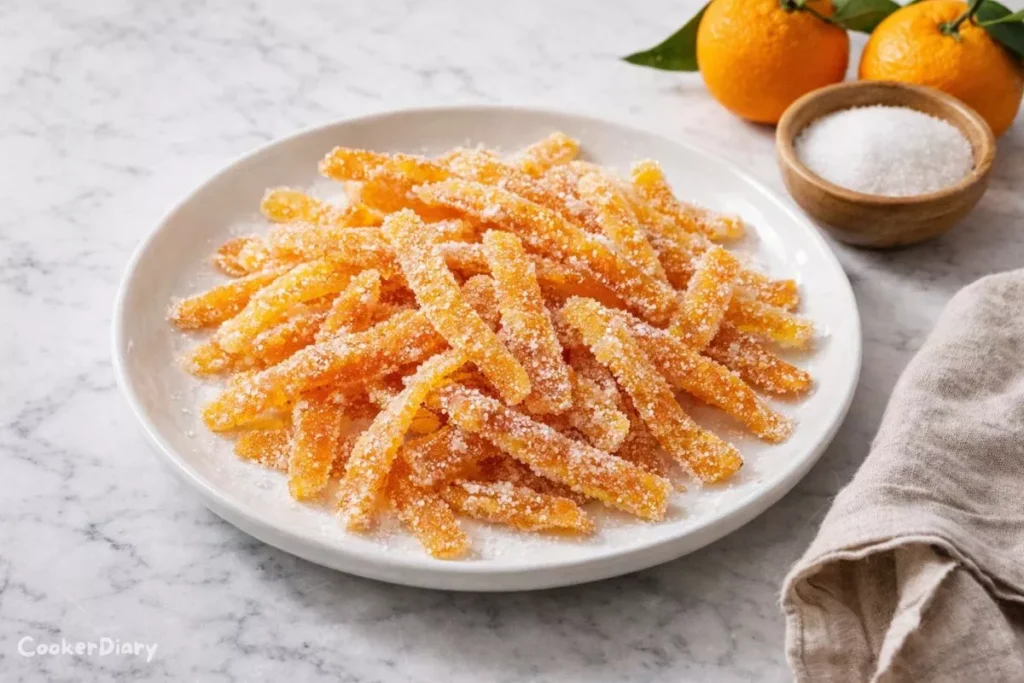
Candied orange peel recipe lovers often discover this sweet treat after realizing how many citrus peels get tossed away daily. I remember the first time I made homemade candied orange peels after baking an orange cake during winter holidays. Instead of discarding the peels, I experimented with candying them. Surprisingly, the result tasted like gourmet confectionery you would expect from a specialty bakery.
Why This Candied Orange Peel Recipe Works
- Proper blanching removes bitterness effectively, therefore producing a smooth citrus flavor.
- Simple pantry ingredients make the recipe affordable and accessible.
- The sugar syrup method ensures a glossy, chewy candy texture.
- The recipe supports multiple dessert uses, including baking and chocolate dipping.
- The technique reflects confectionery fundamentals taught by Le Cordon Bleu, which emphasizes balance between sweetness and texture.
- The step-by-step process makes it suitable for beginner candy makers.
Homemade Candied Orange Peel Recipe
Recipe at a Glance
| Prep Time | Cook Time | Total Time | Servings | Cuisine | Difficulty |
|---|---|---|---|---|---|
| 15 minutes | 45 minutes | 1 hour | 8 servings | European / American confectionery | Easy |
Equipment: Amazon’s Overall Picks
- Sharp vegetable peeler or paring knife
- Medium saucepan
- Fine mesh strainer
- Cooling rack
- Parchment paper
- Candy thermometer (optional)
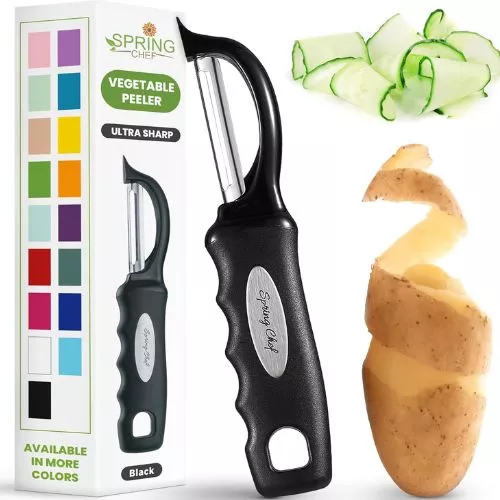
It is designed with an ultra-sharp stainless-steel blade and a soft-grip handle for effortless, precise peeling. It’s a reliable kitchen tool that makes preparing fruits and vegetables faster, smoother, and more enjoyable.
As an Amazon Associate, I earn from qualifying purchases, at no additional cost to you.
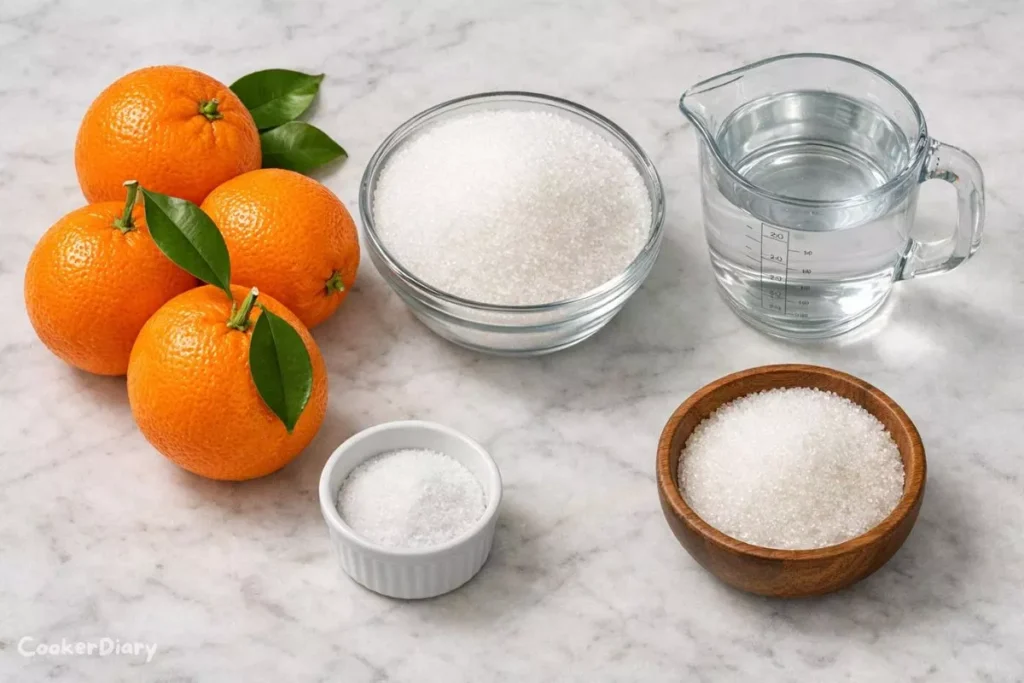
Candied Orange Peel Recipe Ingredients
| Ingredient | Quantity | Purpose |
|---|---|---|
| Fresh oranges | 4 large | Main flavor base |
| Granulated sugar | 2 cups | Syrup and coating |
| Water | 2 cups | Cooking liquid |
| Extra sugar | ½ cup | Outer coating |
| Salt | ¼ teaspoon | Flavor balance |
Ingredient Tips or Substitutes
- Organic oranges reduce pesticide residue and enhance natural flavor.
- Lemon, lime, or grapefruit peels can replace orange peels for variety.
- Coconut sugar provides deeper caramel flavor; however, it slightly darkens color.
- Thinner peel slices dry faster, while thicker strips remain chewy.
Recipe Instructions
- Wash oranges thoroughly under running water. Scrub gently to remove surface residue.
- Peel oranges into thick strips using a vegetable peeler or knife.
- Slice peels into uniform strips to ensure even cooking.
- Bring water to a boil in a saucepan and add the peel strips.
- Boil peels for 10 minutes to remove bitterness. Drain using a strainer.
- Repeat the blanching process two more times. This step significantly improves flavor.
- In the same saucepan, combine sugar, salt, and fresh water. Bring to a gentle simmer.
- Add orange peels to the syrup and cook for 30 minutes until translucent. Stir occasionally to prevent sticking.
- Remove peels from syrup and place them on parchment paper.
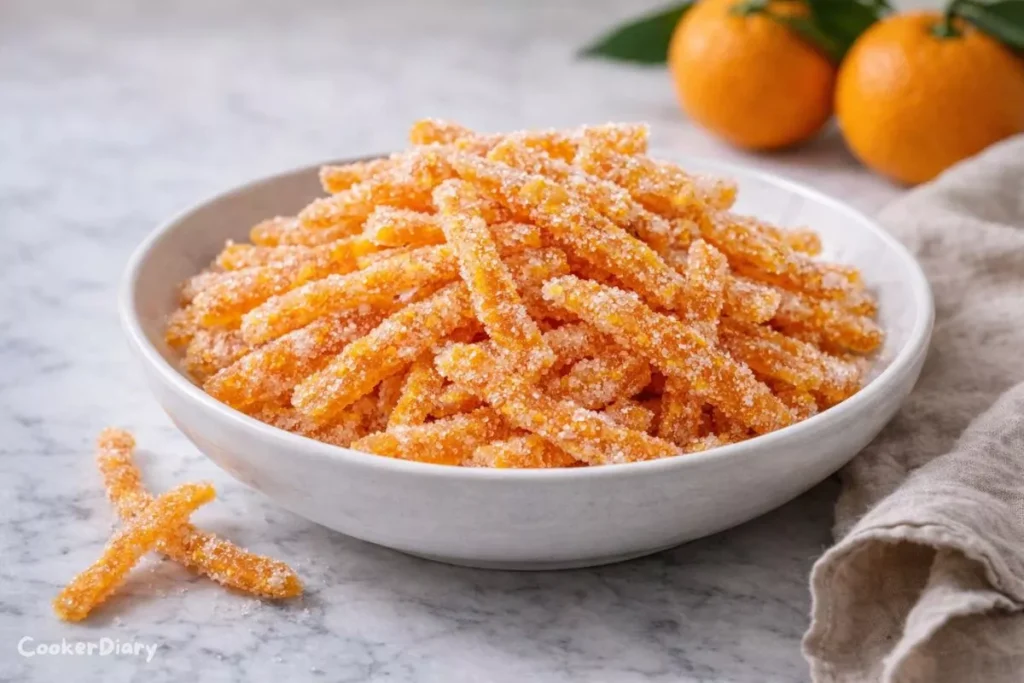
- Roll the warm peels in sugar coating for crystallized texture.
- Transfer peels to a cooling rack and allow them to dry for 6 to 8 hours.
- Store candied peels in an airtight container once fully dried.

Chef’s Tips and Variations
- Dip dried candied orange peels into melted dark chocolate for a gourmet finish.
- Add cinnamon sticks or vanilla extract to syrup for warm flavor notes.
- Save leftover citrus syrup and use it to sweeten tea or cocktails.
- Slice peels into thin matchsticks for cake decoration.
- Store peels between parchment layers to prevent sticking.
- Dessert inspiration featuring candied citrus frequently appears on Food Network, which showcases creative confectionery techniques.
Discover these related recipes:
- Lemon Soufflé French Toast Recipe
- Lemon Bundt Cake Recipe
- Homemade Lemon Cranberry Bread Recipe
- Magic Lemon Cobbler Recipe
- Easy Lemon Roll Cake with Creamy Filling Recipe
- Lemon Blueberry Cheesecake Recipe
Nutrition Information
| Nutrient | Amount Per Serving |
|---|---|
| Calories | 140 kcal |
| Carbohydrates | 35 g |
| Sugar | 30 g |
| Fiber | 2 g |
| Fat | 0 g |
| Sodium | 20 mg |
| Vitamin C | 18% Daily Value |
These values are estimates based on ingredient measurements and follow general food labeling references from the Food and Drug Administration.
FAQs
First, slice orange peel into thin strips. Blanch them in boiling water 3-4 times, discarding the water each time to remove bitterness. Then simmer the peels in sugar syrup (2 cups sugar, 1 cup water) for 30-45 minutes until translucent. Drain, roll in sugar, and let dry overnight on a wire rack.
Yes, absolutely. Orange peels transform beautifully into candy through a simple preservation process. Slow cooking in sugar syrup replaces moisture with sweetness, creating chewy, translucent strips. This traditional technique turns kitchen scraps into a delightful treat perfect for baking, chocolate dipping, or holiday gifting.
Bitterness typically results from insufficient blanching, which fails to remove bitter compounds like naringin and limonin from the peel. Leaving too much white pith can also contribute, though surprisingly the pith isn’t actually the primary culprit—the colored peel contains most bitterness. Some orange varieties are naturally more bitter, requiring additional blanching cycles. Interestingly, storing peels for a month can reduce bitterness by 10-30%.
A Sweet Citrus Tradition Worth Keeping
Homemade candied orange peel transforms simple fruit scraps into elegant confectionery. Moreover, the recipe offers flexibility because it works with multiple citrus varieties and dessert styles. Preparing candied peels also encourages sustainable cooking practices, which reduce food waste while creating flavorful treats.
Many home cooks discover that candied orange peel quickly becomes a pantry staple. It enhances baked goods, adds texture to desserts, and serves as a thoughtful homemade gift. Therefore, once you master this technique, you can easily adapt it to your favorite citrus fruits and flavor combinations.
This post may contain affiliate links. Cookerdiary earns from qualifying purchases at no additional cost to readers. Nutritional information provided in this article is an estimate only and should not replace professional dietary advice.