Traditional Ratatouille Recipe
There’s something incredibly special about French cuisine. The simplicity, the emphasis on fresh ingredients, and the rich flavors are a true testament to the country’s deep culinary heritage. Among all the iconic dishes of France, ratatouille stands out as a quintessential example of Provençal cooking. This vegetable medley, brimming with the flavors of summer, has long been cherished for its heartwarming, rustic charm.
Related: Easy Moroccan Zaalouk Recipe
The first time I tasted traditional ratatouille, it felt like I was transported straight to the sun-kissed fields of Provence. It wasn’t just the flavors that captivated me, but the joy of savoring a dish that had been passed down through generations, one that spoke of the land, the seasons, and the people who grew its ingredients.
If you’re craving a dish that perfectly captures the essence of Mediterranean life, this traditional ratatouille recipe is your ticket. Whether you’re an experienced home cook or a beginner in the kitchen, this flavorful dish is surprisingly easy to make and is sure to impress. Let’s dive into the world of ratatouille and explore how you can bring a taste of Provence right to your kitchen.
What Is Traditional Ratatouille?
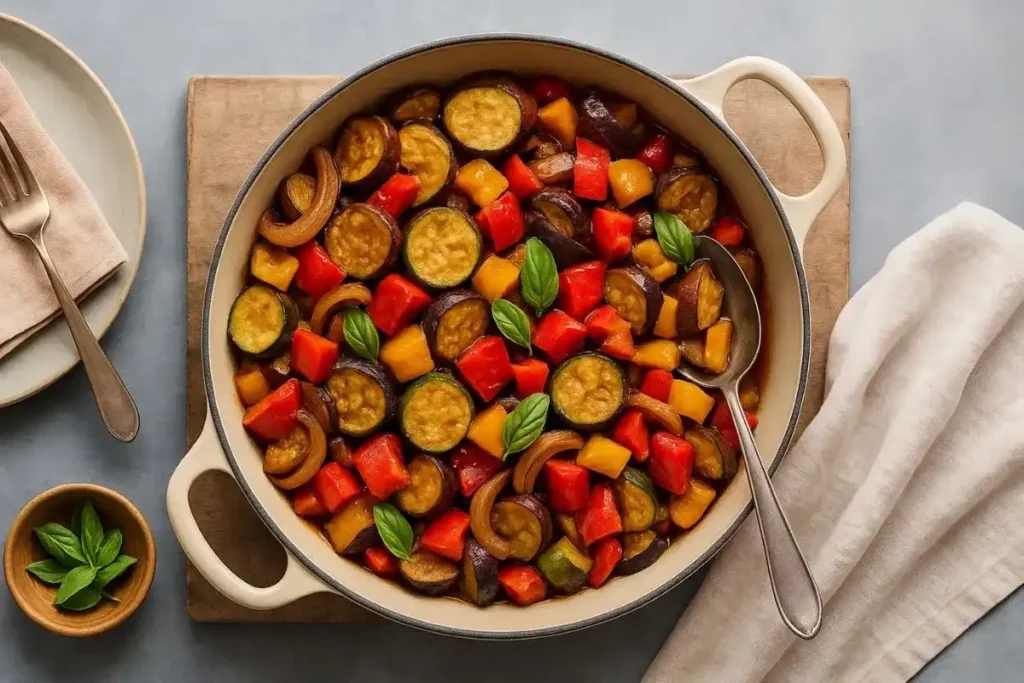
Ratatouille is a French vegetable stew hailing from the sunny region of Provence. While its name may sound fancy, it’s a dish deeply rooted in the everyday cooking of southern France. It’s a humble yet flavorful medley of seasonal vegetables like eggplant, zucchini, bell peppers, onions, and tomatoes, simmered together with garlic and herbs, offering a savory experience that highlights the simplicity of Mediterranean cuisine.
Originally, ratatouille was considered a “peasant” dish. In fact, its name comes from the French verb “rata”, meaning “to stir,” which reflects the method of combining vegetables in a pot or pan. Over time, ratatouille has gained international recognition, especially after being popularized by the animated film “Ratatouille,” where it’s portrayed as the ultimate comfort food.
The beauty of ratatouille lies in its versatility. It’s perfect as a side dish or served as a light, healthy main. And because it’s made from fresh, seasonal ingredients, it’s a dish that can be enjoyed year-round, though it’s especially comforting during the warmer months when vegetables are at their peak.
Essential Ingredients for Traditional Ratatouille
To truly capture the essence of traditional ratatouille, you’ll need some key ingredients. Let’s take a look at the essentials for this flavorful dish.
Key Vegetables
- Eggplant: This vegetable forms the base of ratatouille, offering a tender texture when cooked. Its slightly earthy flavor complements the other vegetables perfectly.
- Zucchini: Another crucial component, zucchini adds a mild sweetness and soft texture that enhances the overall dish.
- Tomatoes: The vibrant red color and juicy, tangy flavor of tomatoes help create a rich sauce-like base.
- Bell Peppers: These add a slight sweetness and a vibrant burst of color to the dish.
- Onions: Onions are essential for building the foundation of flavor, offering a sweet yet savory undertone once caramelized.
Herbs and Spices
- Herbs de Provence: This classic blend of dried herbs, often including thyme, rosemary, and basil, brings an unmistakable Provençal flavor to the dish.
- Garlic: A key ingredient in Mediterranean cooking, garlic adds depth and richness to the stew.
- Basil and Thyme: Fresh basil and thyme are added for extra flavor, rounding out the dish’s aromatic profile.
- Tarragon (optional): If you want to add a slight aniseed flavor, tarragon can be used sparingly.
Olive Oil
- Olive oil is a staple in Mediterranean cooking, and it plays an important role in both sautéing the vegetables and enhancing their flavors. It also enhances the flavor and helps combine the ingredients seamlessly.
| Ingredient | Quantity |
|---|---|
| Eggplant | 1 medium, diced |
| Zucchini | 1 medium, sliced |
| Tomatoes | 2 large, chopped |
| Bell Peppers | 1 red, 1 yellow, chopped |
| Onion | 1 medium, sliced |
| Garlic | 3 cloves, minced |
| Olive Oil | 3 tablespoons |
| Herbs de Provence | 1 tablespoon |
| Fresh Basil | 2 tablespoons, chopped |
| Fresh Thyme | 1 tablespoon, chopped |
| Salt | To taste |
| Black Pepper | To taste |
Related: Hibachi Vegetables Recipe: Healthy & Delicious
Step-by-Step Guide to Making Ratatouille
Now that you have your ingredients ready, let’s dive into the cooking process. Ratatouille may seem like a complicated dish, but it’s actually quite simple to make. Here’s how to prepare it from start to finish.
Preparation
- Slice and Chop the Vegetables: Begin by preparing your vegetables. Slice the eggplant, zucchini, tomatoes, bell peppers, and onions into uniform pieces. This ensures that they cook evenly.
- Set Aside the Herbs: Chop your fresh basil and thyme. Then, make sure to have the Herbs de Provence and garlic ready to go. These will be added during the cooking process.
Cooking Process
- Sautéing the Onions and Garlic: In a large skillet or pot, heat a few tablespoons of olive oil over medium heat. Add the onions and garlic. Cook them until they’re soft and translucent—about 5-7 minutes.
- Add the Vegetables: Once the onions and garlic are ready, add the eggplant, zucchini, bell peppers, and tomatoes to the pan. Stir everything together.
- Seasoning: Add the Herbs de Provence, thyme, and basil. Stir to combine the herbs with the vegetables. Add salt and pepper to taste.
- Simmering: Reduce the heat to low and let the vegetables simmer for about 30-40 minutes, stirring occasionally. The goal is to cook the vegetables until they’re tender but not mushy. The tomatoes will break down to form a rich sauce that will coat the vegetables.
Presentation Tips
Ratatouille is typically served with a rustic flair, reflecting its deep roots in the countryside. You can serve it in a large bowl or over a bed of rice or couscous. Some people also like to serve it alongside grilled meats or fish for a heartier meal.
Nutritional Information of Ratatouille
Traditional ratatouille is not only delicious but also incredibly healthy. Made with an array of fresh vegetables, it’s a low-calorie, nutrient-packed dish. Here’s a breakdown of the key nutritional benefits:
- Low in Calories: Ratatouille is a low-calorie dish, making it a great option for those watching their weight or looking for healthy side dishes.
- Rich in Vitamins and Antioxidants: The vegetables used in ratatouille—especially tomatoes, zucchini, and eggplant—are rich in vitamins A, C, and K. They also contain powerful antioxidants that help fight inflammation and promote heart health.
- High in Fiber: With its generous amount of vegetables, ratatouille provides a good amount of dietary fiber, which aids digestion and promotes gut health.
Nutritional Information (Per Serving)
| Nutrient | Amount |
|---|---|
| Calories | 150 kcal |
| Protein | 3g |
| Carbohydrates | 20g |
| Fiber | 6g |
| Fat | 8g |
| Vitamin A | 15% DV |
| Vitamin C | 35% DV |
| Potassium | 500mg |
FAQs About Ratatouille
What is the best way to serve ratatouille?
Ratatouille can be enjoyed either as a hearty main course or a flavorful side dish. It pairs wonderfully with grilled meats, crusty bread, couscous, or rice.
Can I make ratatouille ahead of time?
Yes, ratatouille often tastes even better the next day as the flavors deepen and blend. Store it in an airtight container in the refrigerator for up to 4 days.
Is ratatouille gluten-free?
Absolutely! Ratatouille is naturally gluten-free, making it a great option for those with gluten sensitivities or allergies.
Can I freeze ratatouille?
Yes, ratatouille freezes well. Allow it to cool completely before transferring it to an airtight container or freezer-safe bag. It can be stored in the freezer for up to 3 months.
How long does ratatouille last in the fridge?
Ratatouille can be stored in the fridge for up to 4 days. Reheat it on the stove over low heat or in the microwave before serving.
Tips and Variations for Your Ratatouille
Ratatouille is incredibly versatile, offering plenty of opportunities to add your own personal touch:
- Add Protein: If you prefer a heartier dish, try adding grilled chicken, lamb, or chickpeas to the ratatouille.
- Spicy Kick: For a little heat, sprinkle in some chili flakes or a dash of paprika.
- Serving Suggestions: Ratatouille is fantastic served over couscous, rice, or alongside a slice of crusty French bread.
Final Thoughts on Traditional Ratatouille
Traditional ratatouille is more than just a vegetable dish—it’s a celebration of fresh produce, bold flavors, and the spirit of southern France. Whether you’re preparing it for a weeknight dinner or as a special side for a family gathering, ratatouille is sure to bring a touch of Provençal magic to your table.
By following this simple recipe, you’ll be able to enjoy the authentic flavors of Provence, all while creating a healthy, nutritious, and delicious meal for yourself and your loved ones. So grab those fresh vegetables, fire up your stove, and bring the essence of ratatouille into your home.
Disclaimer: The nutritional information provided is an estimate and may vary based on ingredient brands and portions used. Please consult with a professional nutritionist for personalized advice. Some links in this post may be affiliate links, meaning we may earn a small commission if you make a purchase at no additional cost to you. This helps support the continued growth of Cooker Diary.