
Kitchen Fires: Top Causes and How to Avoid Them
“Kitchen fires can spark in an instant—stay informed, stay safe! Understanding the causes is your first step to prevention.”
You will find in this article:
- Common Causes of Kitchen Fires: The leading causes include unattended cooking, overheating oil or grease, flammable objects near heat sources, and electrical malfunctions.
- Preventative Measures: Recommendations to prevent kitchen fires encompass staying attentive while cooking, maintaining clean cooking surfaces to avoid grease buildup, keeping flammable items away from heat sources, and regularly inspecting electrical appliances for faults.
- Safety Tips in Case of a Fire: Guidelines suggest knowing how to use a fire extinguisher, never using water on grease fires, and having a fire blanket accessible to smother flames if necessary.
Kitchen fires rank among the top causes of home fires and injuries. They can occur in the blink of an eye, turning a pleasant cooking experience into a hazardous situation. Understanding what usually causes kitchen fires is the first step toward preventing them and keeping your home and family safe.
In this guide, we’ll explore the most common causes of kitchen fires, how to prevent them, and the steps to take if a fire occurs. From grease fires to faulty appliances, we’ll cover everything you need to know to fireproof your kitchen and ensure safe cooking practices. Let’s dive in!

Related: Kitchen Fire Extinguisher 101: Everything You Need to Know!
Common Causes of Kitchen Fires
Grease Kitchen Fires
Grease fires are among the most dangerous and common kitchen fires. They occur when cooking oils or fats become overheated and ignite. For example, leaving a pan of oil unattended on high heat can quickly lead to a fire.
Why Do Grease Fires Happen?
- Overheating Oils: Different oils have varying smoke points, and exceeding this point causes the oil to catch fire.
- Spattering: Water or wet food added to hot oil can cause splattering, leading to flare-ups.
Real-Life Example:
Imagine frying chicken and stepping away to check your phone. The oil overheats and bursts into flames within minutes. This is how quickly a grease fire can occur.
Unattended Cooking
Leaving the kitchen while cooking is a recipe for disaster. It’s easy to get distracted by phone calls, doorbells, or other tasks, but unattended cooking is a leading cause of kitchen fires.
Common Scenarios:
- Forgetting a pot of boiling water or frying pan on the stove.
- Leaving food in the oven without a timer.
Tip: Always stay in the kitchen when cooking, especially when using high heat.
Faulty Electrical Appliances
Electrical fires are another common culprit. Faulty appliances or overloaded outlets can spark fires in your kitchen.
Warning Signs:
- Frayed or damaged cords.
- Sparks or unusual smells from appliances.
- Overheating kitchen gadgets.
Example: Plugging multiple appliances into one outlet using a cheap power strip can overload the circuit, leading to a fire.
Combustible Items Near Heat Sources
Many kitchen fires begin because flammable objects are placed too close to heat sources. Common culprits include dish towels, oven mitts, and paper products.
Prevention Tips:
- Keep all flammable items at least three feet away from the stove.
- Use heat-resistant materials for kitchen surfaces and utensils.
How to Prevent Kitchen Fires

Safe Cooking Practices
Adopting safe cooking habits is crucial for fire prevention. By staying attentive and following simple rules, you can significantly reduce the risk of kitchen fires.
- Never Leave Cooking Unattended: When cooking, especially frying, grilling, or broiling, always stay in the kitchen. Fires can start and spread rapidly if no one is around to intervene. If you need to step away, turn off the heat or ask someone to watch the food.
- Use Timers: Timers are your best friend in the kitchen. Set a timer whenever you cook to remind you to check your food. This is particularly important when baking, roasting, or simmering, as these methods require longer cooking times.
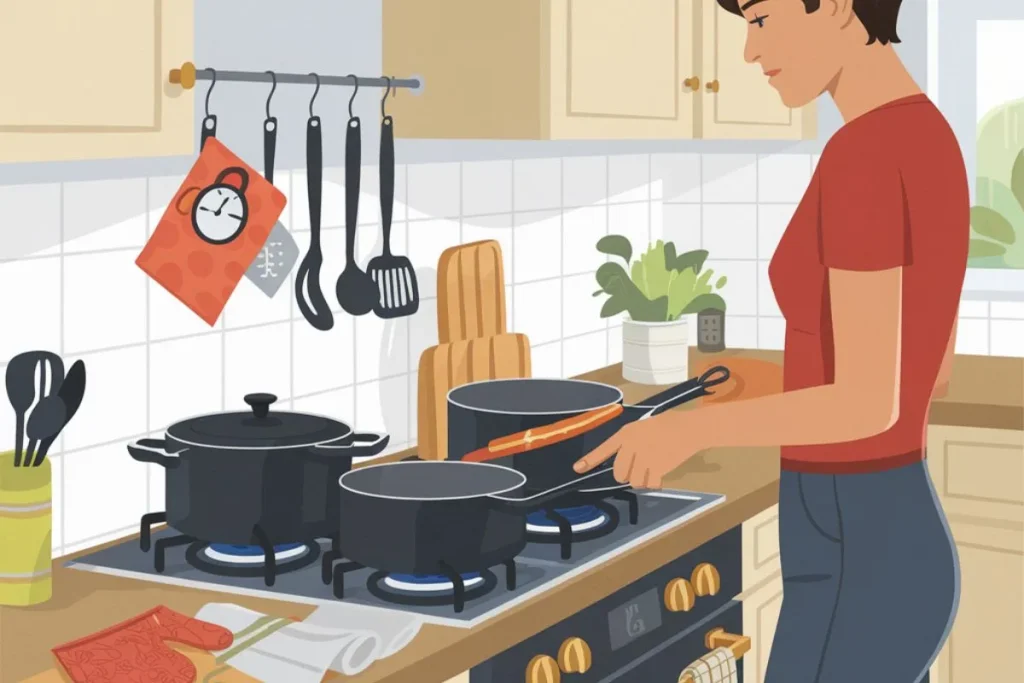
- Turn Pot Handles Inward: Pot handles that stick out from the stove can be accidentally knocked over. Always turn handles inward to prevent spills and accidents. This small adjustment can stop hot liquids or food from causing burns and starting fires.
- Keep Cooking Areas Clear: Ensure your cooking area is clutter-free. Keep flammable items like paper towels, cookbooks, and oven mitts away from heat sources. A clear space not only prevents fires but also makes cooking more efficient.
- Avoid Loose Clothing: Loose sleeves or long scarves can easily catch fire while cooking. Wear fitted clothing or roll up your sleeves to stay safe near open flames or burners.
- Stay Focused: Cooking requires attention. Avoid distractions like phone calls, watching TV, or leaving the kitchen for extended periods. Staying focused can prevent accidents and help you respond quickly if something goes wrong.
- Use Appropriate Cookware: Always use cookware that matches the size of the burner. Oversized or undersized pans can cause uneven heating and increase the risk of spills or flare-ups. Ensure your pans are in good condition, without warped bottoms or damaged handles.
Related: Ninja OG951 Woodfire Grill Review
Proper Maintenance of Appliances
Keeping your kitchen appliances in good working condition is a key step in preventing kitchen fires. Appliances that are not well-maintained can become fire hazards over time. Follow these simple yet essential practices to keep your appliances safe and efficient:
1. Clean Regularly
Cooking appliances, especially ovens and stovetops, accumulate grease, food particles, and grime over time. These residues are highly flammable and can ignite when exposed to heat.
- Ovens and stovetops: Wipe them down after every use. Perform a deep clean at least once a month to prevent buildup.
- Microwaves: Clean the inside and outside regularly to remove food splatters that may overheat and spark.
- Toasters and air fryers: Empty the crumb trays frequently to avoid potential ignition from leftover food debris.
2. Inspect Appliances Frequently
Regular inspections can help you catch issues before they escalate into fire hazards. Make it a habit to:
- Check power cords: Look for fraying, cracking, or exposed wires. Damaged cords can lead to electrical fires.
- Inspect plugs: Ensure they fit snugly into outlets and don’t show signs of overheating, such as scorch marks.
- Test functionality: If an appliance doesn’t work as it should, it might be time for repairs or replacement.
3. Replace Faulty Equipment
Old or malfunctioning appliances are dangerous and can lead to electrical fires. Do not delay replacing or repairing them.
- Warning signs: Appliances that spark, overheat, or emit unusual odors should be disconnected and evaluated immediately.
- Avoid DIY fixes: While it may be tempting to fix appliances yourself, improper repairs can worsen the problem. Consult a professional instead.
- Upgrade outdated models: Older appliances might lack modern safety features. Consider upgrading to energy-efficient models that come with built-in fire prevention mechanisms.
4. Position Appliances Properly
Placement plays a vital role in fire prevention. Avoid clustering appliances near flammable materials, such as curtains or wooden cabinets.
- Maintain distance: Keep at least a few inches of space between appliances and walls to prevent overheating.
- Check ventilation: Ensure appliances like refrigerators and microwaves have proper airflow to prevent overheating.
5. Don’t Overload Electrical Circuits
Plugging too many appliances into a single outlet can overload circuits, leading to sparks and fires.
- Use surge protectors and avoid extension cords for high-wattage appliances like ovens and dishwashers.
- Spread out your appliance usage to reduce the risk of tripping breakers or overheating outlets.
Proper maintenance of appliances isn’t just about prolonging their lifespan—it’s about ensuring the safety of your home and family. By cleaning, inspecting, and replacing equipment as needed, you can minimize fire risks and enjoy a safer cooking environment.
Related Article: COSORI Air Fryer 9-in-1 Full Review
Fireproof Your Kitchen
Creating a fire-resistant kitchen can significantly reduce the risk of kitchen fires. By making thoughtful upgrades and using proper equipment, you can create a safer cooking environment. Here are practical steps to fireproof your kitchen:
Fire-Resistant Countertops
You can use fire-resistant materials like granite, quartz, or stainless steel for your countertops. These materials can withstand high heat and are less likely to ignite compared to wood or laminate. For example, if a hot pan accidentally touches the surface, a fire-resistant countertop won’t catch fire or sustain damage.
Install Stove Guards
Stove guards are smart devices designed to prevent kitchen fires. They can detect overheating and automatically shut off the stove when necessary. This is particularly helpful if you have children or seniors at home who might forget to turn off the burner. Many models also include timers and alarms to alert you when cooking goes beyond a safe temperature.
Use Fire-Resistant Cooking Gloves
Invest in high-quality, fire-resistant gloves for handling hot cookware or baking trays. These gloves not only protect your hands from burns but also minimize the risk of dropping hot items, which can lead to a fire. Always choose gloves made from materials like silicone or Kevlar for maximum heat resistance.
Add Fire-Resistant Backsplashes
Installing a fire-resistant backsplash can shield your kitchen walls from sparks or flames. Materials like tempered glass or stainless steel are excellent choices. These materials are easy to clean and provide an additional layer of safety near cooking areas.
Install a Fire-Extinguishing System
Consider adding a fire-suppression system above your stove. These systems are designed to detect flames and automatically release a fire-extinguishing agent. They’re especially useful in kitchens where high-heat cooking happens frequently.
Keep Fire Blankets Handy
A fire blanket is a simple yet effective tool to smother small fires quickly. Store it in an easily accessible spot, such as a drawer or cabinet near the stove. Practice using it so you can act swiftly if needed.
Regularly Inspect Appliances
Faulty kitchen appliances are a common cause of kitchen fires. Regularly check for frayed cords, loose connections, or unusual noises. Replace old appliances that may pose a risk. Preventative maintenance can go a long way in keeping your kitchen fire-free.
By implementing these fireproofing measures, you create a kitchen that’s better equipped to handle accidents. Small investments in safety can prevent costly and dangerous kitchen fires. Remember, it’s always better to prepare and prevent than to repair and regret.
Related: Ninja Foodi DualZone Air Fryer Review
Proper Storage: A Key to Preventing Kitchen Fires
Related: Gourmia Air Fryer Review
Proper storage is essential in minimizing the risk of kitchen fires. It’s not just about organization; it’s about safety. Storing items correctly can prevent accidents and help keep your kitchen a safe space. Here’s how to get it right:
Keep Flammable Items Away from Heat Sources
Flammable items are a major contributor to kitchen fires. Be mindful of where you store these items to reduce risks.
- Store oils and fats safely: Cooking oils and fats are highly flammable. Keep them away from the stove or oven. Place them in a cool, dark cabinet, ideally far from heat-producing appliances.
- Avoid keeping paper towels near burners: Paper towels, napkins, and other paper products catch fire easily. Store them in a designated drawer or shelf, away from open flames.
- Watch for plastic items: Plastic utensils, cutting boards, and containers can melt or ignite if placed too close to a heat source. Keep them stored away from hot surfaces.
Declutter Your Cooking Space
A cluttered kitchen increases the risk of kitchen fires. When items pile up, they can block ventilation, fall onto burners, or catch fire unexpectedly.
- Organize countertops: Avoid leaving non-cooking items like mail, dishcloths, or tools near the stove.
- Designate storage areas: Assign spots for common items such as pots, pans, and utensils. This keeps everything accessible without overcrowding the space.
- Dispose of old or unused items: If your kitchen feels cramped, it’s time to declutter. Dispose of any expired items or products you no longer need.
Use Proper Containers for Hazardous Materials
Some items in your kitchen require special handling to ensure safety.
- Store cleaning chemicals separately: Keep cleaning supplies like bleach and ammonia far from heat sources and food storage areas. Use labeled, leak-proof containers for added security.
- Use airtight containers for dry goods: Flour, sugar, and spices can catch fire under certain conditions. Storing them in airtight containers reduces this risk and keeps them fresh.
- Keep lids handy: Always have pot and pan lids nearby. If a small fire starts, a lid can help smother the flames quickly.
Check Storage Areas Regularly
Routine checks can help you spot and fix potential hazards before they cause kitchen fires.
- Inspect cabinets and drawers for signs of heat damage or misplaced items.
- Look for leaks or spills that could create slippery surfaces or ignite.
- Rearrange as needed to keep flammable materials far from heat sources.
Essential Kitchen Fires Safety Equipment
Kitchen Fire Extinguishers
Having a fire extinguisher in your kitchen can make the difference between a minor incident and a disaster. Kitchen fires can escalate quickly, so being prepared is key. Let’s explore how to choose, maintain, and use this vital safety tool.
Choose the Right Fire Extinguisher
Not all fire extinguishers are created equal. Picking the right type is essential for effectively handling kitchen fires.
- Class K Extinguishers (Amazon Link): These are designed specifically for grease fires. They work by cooling the flames and cutting off oxygen, preventing reignition. Grease fires are common in kitchens, so a Class K extinguisher is a smart investment.
- ABC Extinguishers (Amazon link): These multipurpose extinguishers handle fires involving combustibles (wood, paper), flammable liquids (gasoline, oil), and electrical equipment. They’re versatile and a good all-around option for home use.
Keep Your Fire Extinguisher Accessible
Place the fire extinguisher in an easy-to-reach location. Ideally, it should be mounted on a wall near your kitchen exit. This ensures you can grab it quickly without getting too close to the fire.
Learn How to Use a Fire Extinguisher
Knowing how to operate your fire extinguisher is just as important as having one. Follow the PASS technique:
- Pull: Pull the safety pin to break the seal.
- Aim: Aim the nozzle at the base of the fire, not the flames.
- Squeeze: Squeeze the handle to release the extinguishing agent.
- Sweep: Sweep the nozzle side to side until the fire is out.
Practice this method mentally or with a fire safety professional to stay prepared.
Maintain Your Fire Extinguisher
Regular maintenance ensures your extinguisher works when you need it most. Here’s what to check:
- Pressure Gauge: Make sure the needle stays within the green zone.
- Condition: Look for any physical damage, such as dents or rust.
- Inspection Schedule: Most extinguishers require yearly inspections by a professional.

Related: Breville Air Fryer: Double Chamber Hot Air Fryer
When to Use a Fire Extinguisher
Use a fire extinguisher only if:
- The fire is small and contained (e.g., on a stovetop).
- You have a clear escape route.
- You feel confident handling the extinguisher.
If the fire grows too large or fills the room with smoke, leave immediately and call emergency services.
Having the right fire extinguisher, knowing how to use it, and maintaining it properly are critical steps in preventing kitchen fires from becoming unmanageable. A few minutes of preparation can save lives and property.
Smoke Detectors: Your First Line of Defense Against Kitchen Fires
Smoke detectors are essential in preventing kitchen fires from turning into disasters. They provide an early warning, giving you time to act quickly. Here’s how to make the most of these lifesaving devices:
Choose the Right Placement
Place smoke detectors near the kitchen, but keep them at a safe distance from cooking appliances. Installing them too close may cause false alarms due to steam or smoke from regular cooking. Aim for a location about 10 feet away from the stove or oven. This ensures accurate detection while reducing unnecessary disruptions.
Regular Testing is Crucial
Check your smoke detectors monthly. Press the test button to confirm they function correctly. If the alarm doesn’t sound, replace the batteries immediately. A functional smoke detector is your best defense against unnoticed kitchen fires.
Replace Batteries and Units on Time
Even hardwired smoke detectors often have backup batteries. Replace these annually or when the detector chirps, signaling low power. Additionally, replace the entire unit every 10 years. Over time, sensors lose sensitivity, compromising their effectiveness.
Use Interconnected Detectors
Modern smoke detectors can connect wirelessly. When one alarm is triggered, all detectors in your home will sound. This feature is especially useful in larger homes where a fire in the kitchen might not be heard in distant rooms.
Be Aware of Special Options
Some smoke detectors are designed to reduce false alarms, specifically in kitchen environments. These detectors use advanced sensors to differentiate between cooking smoke and actual fires. Consider installing one of these if false alarms are a frequent issue.
By maintaining properly installed and functional smoke detectors, you can significantly reduce the risk of kitchen fires spreading. Small steps like testing and timely battery replacement can make a big difference in your safety.
Fire Blankets: Your Second Defense Against Kitchen Fires
Fire blankets are essential for any kitchen. They provide a quick and efficient way to handle small kitchen fires. These tools are simple to use and can prevent a small incident from turning into a major disaster.
How to Use a Fire Blanket
- Cover the Flames Completely
If a grease fire occurs, grab the fire blanket quickly. Hold it by the edges to protect your hands. Gently place it over the flames. Ensure the entire fire is covered. This smothers the fire by blocking the oxygen supply, effectively putting it out. - Protect a Person on Fire
If someone’s clothing catches fire, act immediately. Wrap the blanket securely around them. This will smother the flames. Make sure to instruct them to “stop, drop, and roll” to aid the process. - Leave It in Place
Do not remove the blanket immediately. Let it stay over the fire until you’re sure the flames are out. This prevents reignition.
Why Fire Blankets Are Ideal for Kitchen Fires
- Quick Deployment
Fire blankets are easy to grab and use. They require no special skills or training. This makes them perfect for emergencies. - No Messy Cleanup
Unlike fire extinguishers, fire blankets leave no residue. This makes them a clean and convenient option for handling fires in the kitchen. - Versatility
A fire blanket is not limited to stove-top fires. It’s useful for microwave fires, toaster fires, and even accidental fires caused by electrical appliances.
Tips for Keeping Fire Blankets Accessible
- Store Them Within Reach
Place the fire blanket near your cooking area. Consider mounting it on a wall or storing it in an easy-to-access drawer. - Practice Using It
Read the instructions and practice deploying the blanket. Familiarity can save valuable seconds during a real emergency. - Inspect Regularly
Check the condition of the fire blanket periodically. Ensure it’s free from damage and stored correctly.
Incorporating a fire blanket into your fire safety plan is a smart decision. This simple tool can be a lifesaver in preventing kitchen fires from escalating. Having it close at hand can give you peace of mind and ensure you’re prepared for unexpected emergencies.
Stove Guards: A Modern Solution to Prevent Kitchen Fires

Related: Black Kitchen Cabinets Stylish Ideas for the Modern Home
Stove guards are a smart and essential tool in preventing kitchen fires. They are designed to enhance safety by monitoring your stove’s activity and taking proactive measures to avoid overheating. Here’s how they work and why you should consider installing one in your kitchen:
How Do Stove Guards Work?
Stove guards are intelligent devices that track the temperature and activity of your stove. They include sensors that detect when the heat becomes too high or when a burner is left on for an extended period.
If the device senses a potential danger, it shuts off the heat automatically. This quick action can prevent a fire from starting. Some advanced models even alert you through an app or sound an alarm.
Benefits of Stove Guards
- Prevents Overheating Accidents
Overheating is a leading cause of kitchen fires. Stove guards act as a safety net, cutting off the heat before it becomes hazardous. - Ideal for Busy Households
In a busy kitchen, it’s easy to forget a burner is on. A stove guard eliminates that risk by keeping constant watch. - Adds Peace of Mind
Whether you’re cooking or stepping out briefly, a stove guard ensures your kitchen remains safe. It’s especially helpful for elderly individuals or families with young children.
Installing a Stove Guard: What to Consider
When choosing a stove guard, look for these features:
- Automatic Shut-Off: This is the core function of the device.
- Easy Installation: Use a model that works with your stove type and can be set up quickly.
- Compatibility with Apps: Some stove guards connect to your smartphone for added control and notifications.
Real-Life Example: A Kitchen Saved by a Stove Guard
Imagine cooking soup on a chilly evening and forgetting to turn off the burner. Without a stove guard, the heat could escalate, leading to a dangerous kitchen fire. With a stove guard, the heat is shut off automatically, averting disaster.
Why Stove Guards Are Worth the Investment
Kitchen fires cause millions of dollars in damage annually and put lives at risk. Stove guards, while not mandatory, are a worthwhile investment in safety. They are especially beneficial in homes with vulnerable individuals or those prone to distractions.
By installing a stove guard, you reduce the risk of kitchen fires and create a safer cooking environment for your family. Don’t wait for an accident to happen—consider upgrading your kitchen safety today.
What to Do in Case of a Kitchen Fire
Dealing with Grease Fires
Grease fires are one of the most dangerous causes of kitchen fires. They can escalate quickly if not handled correctly. Knowing what to do in the moment is essential to prevent injuries and further damage. Follow these critical steps to manage a grease fire effectively:
Do Not Use Water
Avoid using water to put out a grease fire. Pouring water on burning grease causes it to splatter, which spreads the flames. This reaction happens because oil and water do not mix. Instead, water turns into steam, propelling hot oil and fire outward. This can make the situation far worse in seconds.
Smother the Flames
The most effective way to extinguish a grease fire is by smothering it. Use a metal lid or baking sheet to cover the pan completely. This action cuts off the fire’s oxygen supply, which extinguishes the flames. Ensure you use a metal lid—not glass. Glass can shatter due to the intense heat.
Turn Off the Heat
If it’s safe to approach, switch off the heat source immediately. Cutting off the heat prevents the fire from growing or reigniting. Do not move the pan, as this may cause hot grease to spill and spread the fire further.
Use Baking Soda for Small Fires
For smaller grease fires, you can sprinkle baking soda directly onto the flames. When heated, baking soda produces carbon dioxide. This gas helps extinguish the fire by cutting off its oxygen supply. However, only use baking soda—never flour or powdered sugar. These can ignite and worsen the fire.
Have a Fire Extinguisher Nearby
If the fire becomes unmanageable, use a Class B fire extinguisher, which is specifically designed for flammable liquids like grease. Aim the nozzle at the base of the fire and spray in a sweeping motion. Always familiarize yourself with the instructions for using a fire extinguisher before an emergency occurs.
Call for Help if Needed
If the fire continues to grow despite your efforts, evacuate immediately. Close the kitchen door to contain the fire, and call emergency services. Avoid trying to extinguish a fire that is beyond control. Focus on keeping yourself and everyone in your home safe.
Preventing Grease Fires
It’s always better to prevent a fire than to face its consequences. Follow these precautions to reduce the risk of grease fires:
- Never leave frying or sautéing food unattended.
- Use a thermometer to monitor oil temperatures. Overheating oil can ignite.
- Keep flammable items like dish towels and paper near the stove.
- Clean grease buildup from stovetops and ovens regularly.
By understanding and applying these tips, you can handle grease fires effectively and prevent them from happening in the first place. These steps are essential for creating a safer cooking environment and reducing the risks of kitchen fires.
Small Appliance Fires: How to Handle and Prevent Them
Small appliances like toasters, microwaves, and air fryers are convenient. However, they are common culprits behind kitchen fires. Knowing how to prevent and respond to these incidents is essential for a safe cooking environment.
Related: COSORI Pro II Air Fryer Review
Common Causes of Small Appliance Fires
- Overheating: Appliances like toasters can overheat if crumbs build up. Regular cleaning helps prevent this.
- Electrical Issues: Frayed cords or faulty wiring can spark fires. Always check cords before use.
- Improper Use: Misusing appliances, like putting metal in a microwave, can cause a fire. Follow the manufacturer’s instructions.
Steps to Handle Small Appliance Fires
- Unplug the Appliance: If the fire starts in a small appliance, unplug it immediately—only if it’s safe to do so. This cuts off the power source.
- Smother the Flames: Use a fire blanket or a dry chemical extinguisher to put out the fire. Avoid water, as it can make electrical fires worse.
- Evacuate If Necessary: If the fire spreads or becomes unmanageable, leave the area. Call emergency services for assistance.
Preventing Small Appliance Fires
- Keep Appliances Clean: Clean appliances like toasters and air fryers regularly. Built-up grease and crumbs are fire hazards.
- Inspect Cords and Plugs: Replace damaged cords or loose plugs. Avoid overloading outlets with multiple appliances.
- Use Appliances Correctly: Read and follow user manuals. Never operate appliances near flammable items, such as paper towels or curtains.
- Unplug When Not in Use: Turn off and unplug appliances after cooking. This prevents overheating and accidental activation.
Real-Life Example: A Cautionary Tale
Imagine making toast while multitasking. You forget to clean the toaster, and crumbs ignite. This small oversight could lead to a significant kitchen fire. By simply cleaning your toaster and staying attentive, you can avoid such risks.
Small appliances make life easier, but they come with responsibilities. Regular maintenance, safe usage, and quick action can significantly reduce the risk of kitchen fires caused by these tools. Safety should always come first to safeguard your home and family.
Using a Fire Extinguisher
Remember the PASS technique:
- Pull the pin.
- Aim at the base of the fire.
- Squeeze the handle.
- Sweep from side to side.

Evacuation Plan
If a kitchen fire gets out of control, evacuation is essential. Safety should always be the top priority.
First, assess the situation. If the fire is spreading quickly, don’t try to contain it yourself. Instead, evacuate immediately. Make sure everyone in the household knows the plan and can act quickly.
Once you’re outside, move away from the building. Stay in a safe location, and call 911. Provide them with details about the fire, including the address and whether anyone is trapped inside.
Do not re-enter the building until the fire department confirms it’s safe. By having a clear evacuation plan, you can reduce the risks associated with kitchen fires and keep everyone safe.
Final Tips to Stay Safe in the Kitchen
Educate Family Members
It’s essential to educate all household members about kitchen fire safety. Teach everyone, including children, how to prevent and respond to kitchen fires. Show them how to use a fire extinguisher properly. This hands-on approach ensures they’ll be prepared if a fire breaks out. Regularly remind them of the importance of staying cautious while cooking.
Regular Inspections
Conduct regular inspections of your kitchen appliances, cords, and outlets. Check for any damage or wear that could potentially lead to a fire. A faulty appliance or exposed wire can easily spark a kitchen fire. By maintaining your equipment, you significantly reduce the risk. Be proactive about fixing or replacing damaged items.
Kitchen Safety Drills
Running kitchen safety drills can be life-saving. Practice different emergency scenarios with your family. Simulate a kitchen fire and go through the motions of extinguishing it. Ensure everyone knows where fire extinguishers are located. Regular fire drills not only boost confidence but also help your family react quickly in case of a real emergency.
Resources for Fire Safety
Always refer to trusted resources for up-to-date fire safety tips. The National Fire Protection Association (NFPA) is a great place to start. Their guidelines provide in-depth knowledge on kitchen fire prevention. Stay informed about the latest safety measures to keep your home and loved ones safe from kitchen fires.ke the National Fire Protection Association (NFPA) for more tips and guidelines.
Protect Your Home and Loved Ones from Kitchen Fires
Kitchen fires are preventable with the right knowledge and preparation. By understanding the common causes and taking proactive steps to prevent fires, you can protect your home and loved ones. Remember, staying vigilant and investing in safety equipment can make all the difference.
Take action today to fireproof your kitchen and share this article to spread awareness about kitchen fire safety. Together, we can create safer homes for everyone.