Asian Salad Recipes: 7 Authentic Classics from China to Indonesia

Asian cuisine celebrates vibrant colors, bold flavors, and wholesome ingredients. But it isn’t just about stir-fries and noodles. Asian salad recipes have quietly made their mark, often as refreshing, flavor-packed dishes that reflect the diversity of Asia. I remember the first time I had a Thai green papaya salad at a bustling Bangkok street market. The zesty tang of lime, the fiery chilies, and the crunch of roasted peanuts opened my palate to a whole new world of flavors.
Related: Best Dense Bean Salad Recipe for Meal Prep & Potlucks
What Makes Asian Salad Recipes Unique?
The Flavor Profile: Sweet, Sour, Salty, Spicy, and Umami
Unlike Western salads that may rely heavily on dressings or cheese, Asian salads are defined by their balance of contrasting yet harmonious flavors. Thai salads might combine lime juice, fish sauce, and sugar. Japanese salads often emphasize umami with soy sauce and miso. This layering of flavors creates a sensory experience with each bite.
Fresh Herbs & Crunchy Textures
A hallmark of Asian salads is the generous use of herbs. Mint, Thai basil, and cilantro aren’t mere garnishes — they’re key flavor components. Alongside these herbs, you’ll often find crisp textures from ingredients like cucumbers, shredded vegetables, peanuts, and even crispy noodles or shallots.
Asian Salad Recipes are Healthy and Versatile
Asian salads are healthy by nature. They often feature crisp vegetables, lean proteins, and flavorful herbs. Because of this, they are both nourishing and satisfying. Many recipes are naturally gluten-free and dairy-free. Therefore, they fit well into a variety of diets.
For example, Thai Chicken Salad pairs grilled chicken with fresh herbs and crisp shredded vegetables. It uses a tangy lime dressing, which adds flavor without heavy calories. Similarly, Chinese Cabbage Salad is light and crunchy. It includes napa cabbage, carrots, and toasted sesame seeds. As a result, it’s both refreshing and fiber-rich.
Vietnamese Noodle Salad offers another nutritious option. It blends rice noodles, cucumber, and mint with grilled shrimp or tofu. Since it includes minimal oil and plenty of vegetables, it’s a heart-healthy choice. Likewise, Korean Cucumber Salad uses simple ingredients like cucumbers, vinegar, and chili flakes. Due to its low calorie count, it works well for weight-conscious meals.
Asian Slaw is great for boosting your vegetable intake. It includes colorful cabbage, bell peppers, and scallions. A light sesame dressing ties everything together. Meanwhile, Sesame Ginger Tofu Salad brings plant-based protein into the mix. It brings together baked tofu, fresh greens, and a zesty ginger-soy dressing. This makes it both filling and vegan-friendly.
Don’t forget Japanese Seaweed Salad. It uses mineral-rich seaweed, which supports thyroid health. The dressing includes rice vinegar, sesame oil, and soy sauce. So, it’s simple but flavorful.
Moreover, these salads work well for weekly meal prep. You can slice the vegetables ahead of time and keep them in separate containers. Then, just add your dressing before serving. This way, your lunch stays crisp and fresh. In addition, the flavors often improve over time as they marinate.
7 Authentic Asian Salad Recipes from China to Indonesia
These recipes highlight the rich variety and complexity found in Asian cuisine. Below, you’ll find a mix of vegetarian and protein-packed options, all deeply rooted in their respective cultures.
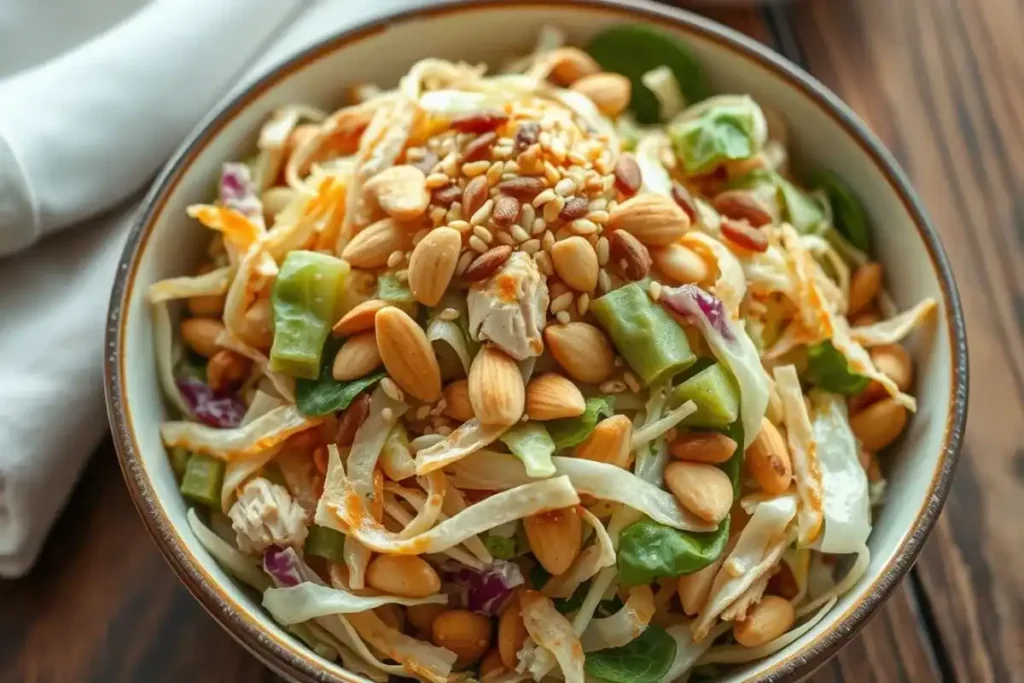
Chinese Chicken Salad
Related: China Chef Secrets: Mastering the Art of Authentic Chinese Cuisine
Ingredients:
| Ingredient | Quantity |
|---|---|
| Napa cabbage | 2 cups, shredded |
| Cooked chicken | 1 cup, shredded |
| Carrots | ½ cup, julienned |
| Crispy wonton strips | ½ cup |
| Green onions | 2 tbsp, sliced |
| Sesame seeds | 1 tsp |
Dressing: Soy sauce, rice vinegar, hoisin, sesame oil, honey
Instructions:
- Cook chicken and shred once cooled.
- Chop vegetables (cabbage, carrots, scallions).
- Mix dressing (soy sauce, rice vinegar, sesame oil, sugar).
- Toss your Chinese Chicken salad with dressing and garnish it with sesame seeds and crispy noodles.
Tip: Although this salad has become popular in the West, it traces its inspiration to cold Cantonese dishes that highlight simplicity and freshness.
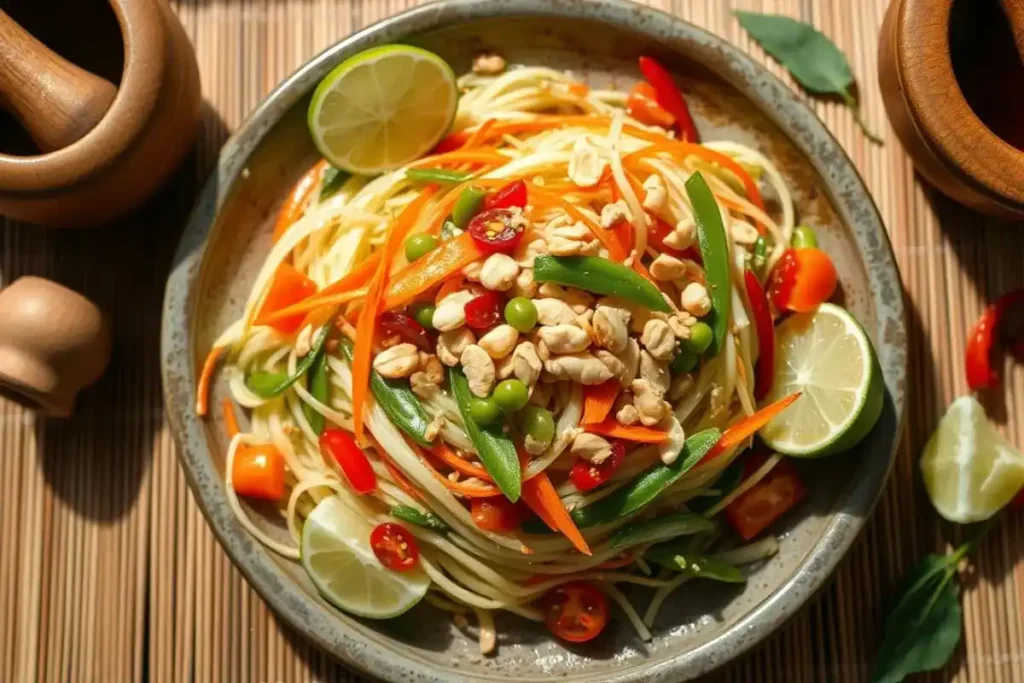
Thai Green Papaya Salad (Som Tum)
Related: Easy Coconut Sticky Rice Recipe – Just Like in Thailand!
Ingredients:
| Ingredient | Quantity |
| Green papaya | 2 cups, shredded |
| Cherry tomatoes | ½ cup, halved |
| Roasted peanuts | ¼ cup |
| Garlic & chilies | To taste |
| Green beans | ¼ cup, chopped |
Dressing: Lime juice, fish sauce, palm sugar
Instructions:
- Shred green papaya using a julienne peeler or grater.
- Pound garlic and chilies in a mortar.
- Add the lime juice, fish sauce, and sugar, then stir in papaya, tomatoes, and peanuts.
- Toss well and serve fresh.
Advice: Use a mortar and pestle to lightly crush the ingredients and mix them thoroughly. This technique enhances the depth of flavor.
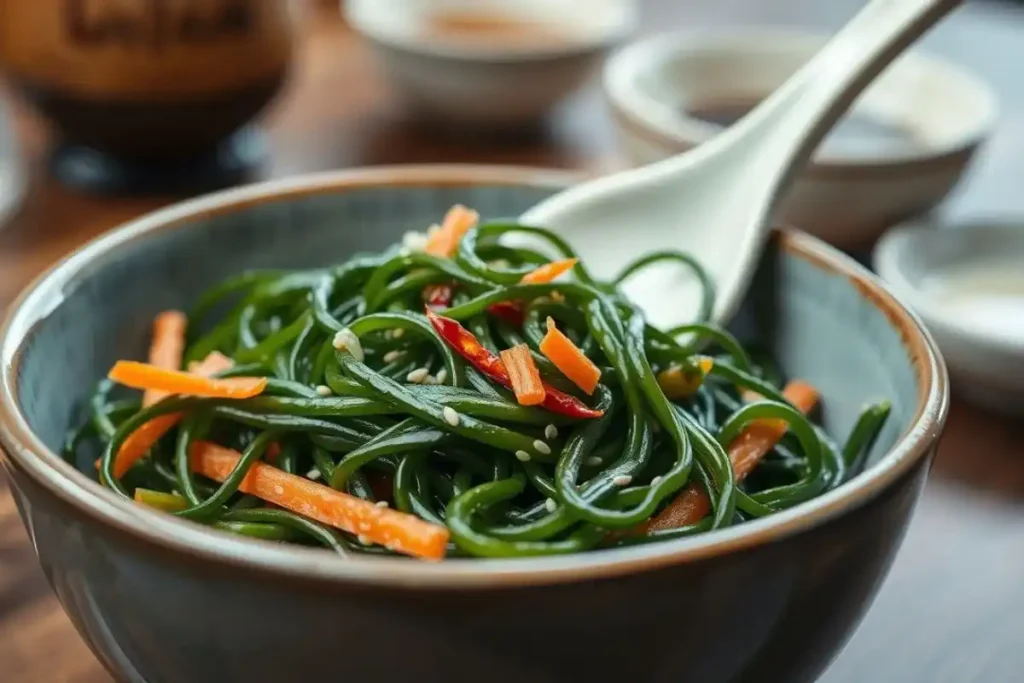
Japanese Seaweed Salad (Wakame)
Related: What Is Japanese Soybean Paste? Uses, Types & Benefits
Ingredients:
| Ingredient | Quantity |
| Dried wakame | ¼ cup (soaked) |
| Rice vinegar | 2 tbsp |
| Soy sauce | 1 tbsp |
| Sesame oil | 1 tsp |
| Sesame seeds | 1 tsp |
Instructions:
- Soak dried wakame in warm water until rehydrated, then drain.
- Mix dressing (rice vinegar, soy sauce, sesame oil, sugar, ginger).
- Combine seaweed and dressing, then garnish with sesame seeds.
Notes: Wakame is rich in iodine and antioxidants. This salad is typically served chilled and often found as a starter in Japanese meals.
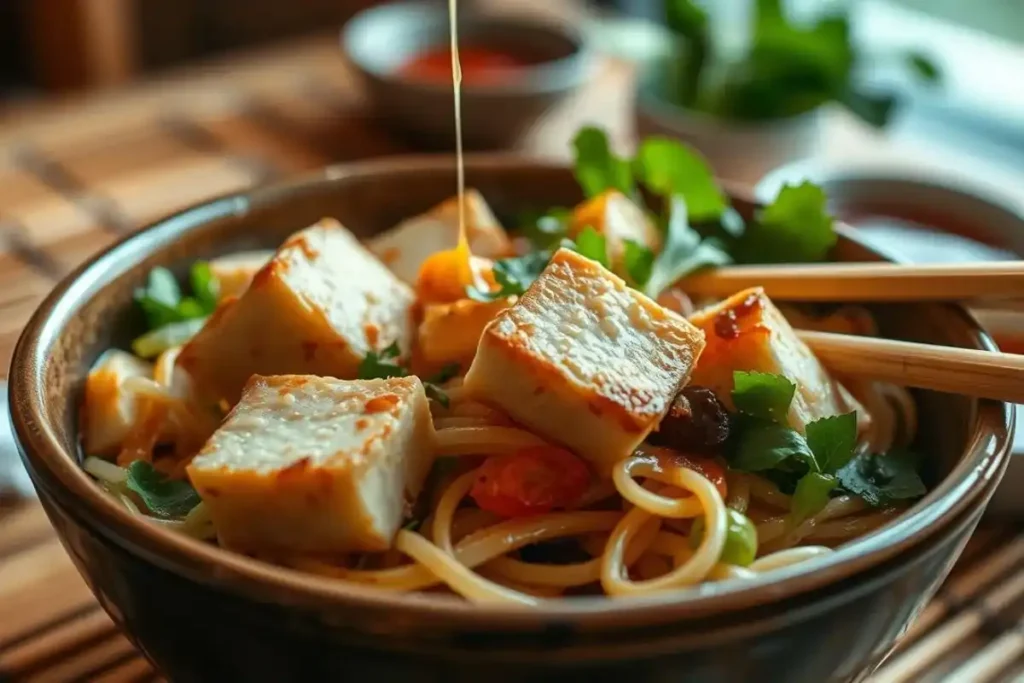
Vietnamese Noodle Salad (Bún Chay)
Related: Tea Eggs Recipe: Traditional Chinese Street Food at Home
Ingredients:
| Ingredient | Quantity |
| Vermicelli noodles | 1 cup, cooked |
| Carrots & cucumbers | ½ cup each, julienned |
| Mint & cilantro | ¼ cup combined |
| Fried tofu | ½ cup, cubed |
| Pickled vegetables | ¼ cup |
Bún Chay Sauce: Nuoc cham (lime, fish sauce, garlic, chili, sugar)
Instructions:
- Cook rice noodles, rinse in cold water, and drain.
- Prepare toppings: sliced veggies, fresh herbs, tofu or shrimp.
- Make nuoc cham dressing (fish sauce, lime juice, garlic, chili, sugar).
- Assemble in bowls and drizzle with dressing.
Tip: This dish is great for hot weather and perfect for vegetarian or meat options.
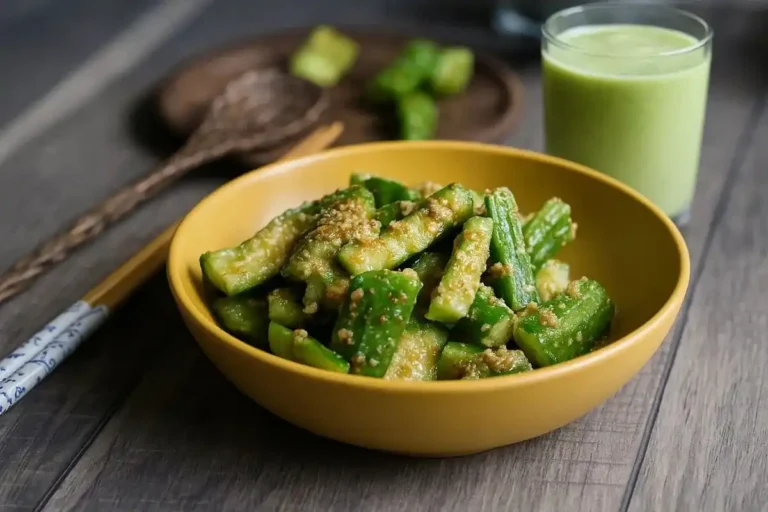
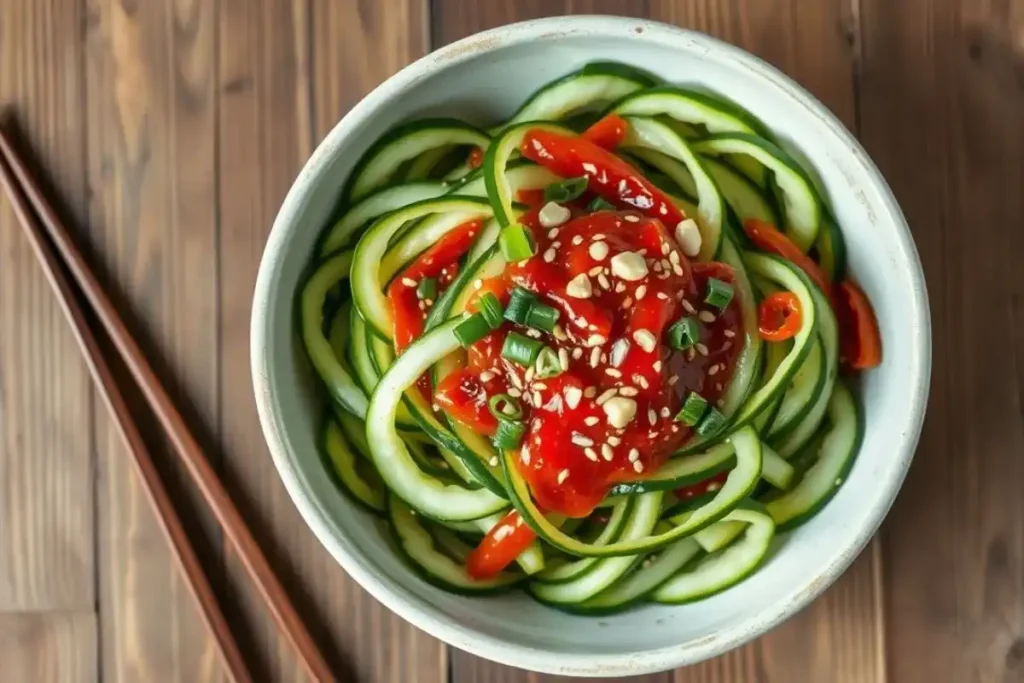
Korean Spicy Cucumber Salad (Oi Muchim)
Related: Chinese Kitchen: Essential Spices and Sauces
Ingredients:
| Ingredient | Quantity |
| Cucumber | 1 large, sliced |
| Gochugaru (chili flakes) | 1 tbsp |
| Garlic | 1 clove, minced |
| Vinegar | 1 tbsp |
| Sesame oil | 1 tsp |
Preparation: Quick to prepare and ready in minutes. It pairs well with rice or Korean barbecue.
Instructions:
- Slice cucumbers thinly and sprinkle with salt; let sit, then drain excess water.
- Mix seasoning paste (gochugaru, garlic, rice vinegar, sesame oil, sugar).
- Toss cucumbers in paste and refrigerate for 10 minutes before serving.
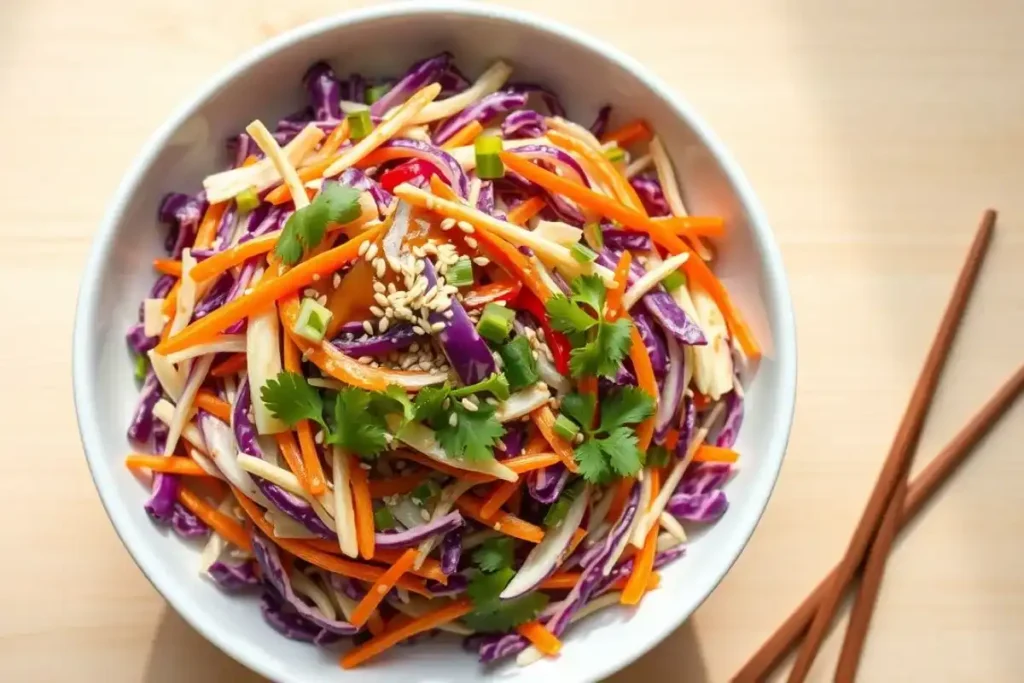
Asian Slaw
Related: Mango Sticky Rice Recipe
Ingredients:
| Ingredient | Quantity |
| Cabbage (red or green) | 2 cups, shredded |
| Carrots | ½ cup, shredded |
| Bell peppers | ½ cup, thinly sliced |
| Almonds or peanuts | ¼ cup, chopped |
| Green onions | 2 tbsp, sliced |
Dressing: Sesame soy dressing with rice vinegar and a hint of honey
Instructions:
- Prepare the Veggies: In a large mixing bowl, combine shredded cabbage, shredded carrots, sliced bell peppers, and green onions.
- Add Crunch: Toss in the chopped almonds or peanuts for added texture.
- Make the Dressing: In a small bowl, whisk together sesame oil, soy sauce, rice vinegar, and a touch of honey until smooth.
- Toss and Coat: Pour the dressing over the vegetables and nuts, then toss everything together until evenly coated.
- Chill and Serve: Refrigerate the slaw for 10–15 minutes to let the flavors blend together before serving. Serve chilled.
Optional Add-Ins: Top with crispy ramen noodles or mix in grilled chicken to make it a full meal.
Customization Tip: Add ramen noodles or grilled chicken for a complete meal.
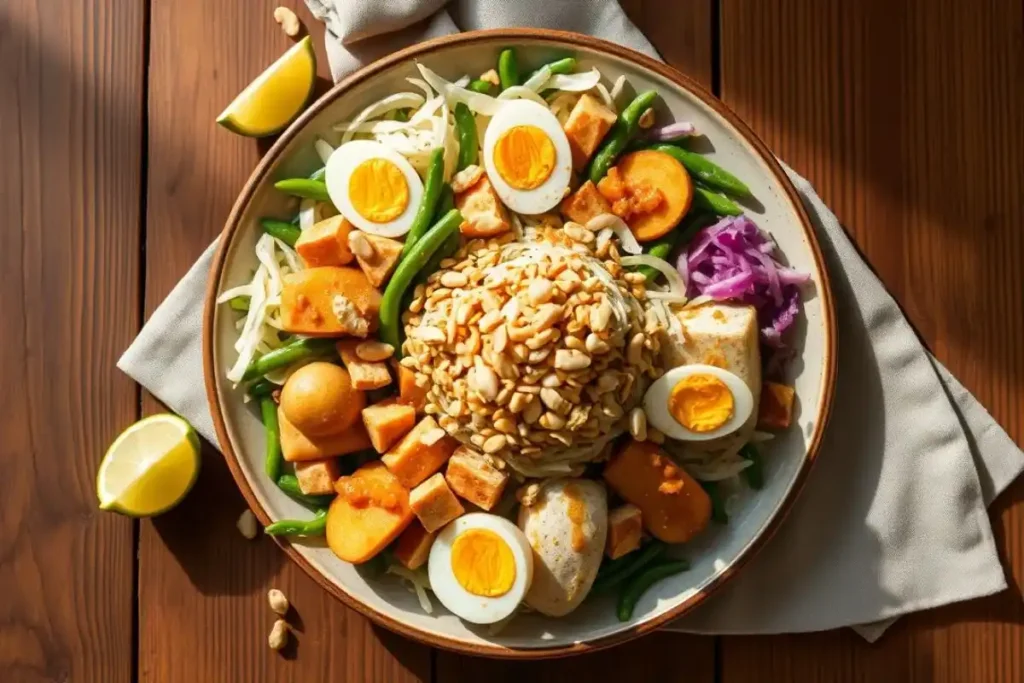
Indonesian Gado-Gado
Related: Spicy Cucumber Salad Recipe – Ready in 10 Minutes!
Ingredients:
| Ingredient | Quantity |
| Boiled potatoes | 1 cup, diced |
| Cabbage & carrots | 1 cup combined |
| Tempeh or tofu | ½ cup, grilled |
| Hard-boiled eggs | 2, halved |
| Cucumber slices | ½ cup |
Dressing: A smooth peanut sauce mixed with lime juice, garlic, and a touch of chili.
Instructions:
- Boil vegetables and eggs until tender; blanch bean sprouts.
- Arrange ingredients on a platter: potatoes, green beans, tofu, eggs, etc.
- Pour peanut sauce (made with peanuts, tamarind, chili, palm sugar) over everything.
- Top with fried shallots and krupuk (shrimp crackers).
Pro Tip: Serve with prawn crackers for a satisfying crunch.
Essential Dressings and Toppings in Asian Salad Recipes
Classic Dressings by Region
| Region | Signature Dressing |
| Thai | Lime juice, fish sauce, sugar, garlic, chili |
| Japanese | Soy sauce, rice vinegar, sesame oil |
| Indonesian | Peanut sauce with coconut milk and lime |
Each dressing plays a key role in creating regional identity. Balancing sweet, salty, sour, and spicy flavors is essential.
Crunchy & Fresh Toppings
- Fried shallots
- Roasted peanuts
- Crispy wonton strips
- Toasted sesame seeds
- Fresh herbs: mint, Thai basil, cilantro
Healthy Fats and Protein Sources
- Tofu, tempeh, grilled chicken, shrimp
- Eggs and edamame for vegetarian options
- Sesame oil and avocado oil as dressing bases
How to Serve and Store Asian Salads
Best Ways to Plate and Pair
Serve Asian salads in shallow bowls to showcase their vibrant colors and textures. Pair them with sticky rice, grilled meats, or noodle soups to round out your meal.
Meal Prep Tips
- Store dressings separately to keep salads fresh.
- Pack herbs and crispy toppings in different containers.
- Most salads can last 2–3 days when stored properly in the fridge.
Gluten-Free and Vegan Options
- Replace soy sauce with tamari for gluten-free versions.
- Use tofu, tempeh, or beans as protein sources for vegans.
- Skip fish sauce or use plant-based alternatives for vegan adaptations.
FAQs About Asian Salad Recipes
Without a doubt, Thai green papaya salad is one of the most recognized and widely enjoyed Asian salads. It is popular in Thailand, Laos, Cambodia, and Vietnam. It delivers a perfect balance of spicy, sour, sweet, and salty flavors. The crunchy green papaya combined with chili, lime, and fish sauce creates an unforgettable experience. Because of its bold taste and refreshing nature, people often enjoy it as a main course or side dish.
Yes, they are generally very healthy. Most Asian salads are low in saturated fat and high in fiber. They often include a variety of raw vegetables, which are excellent sources of vitamins and minerals. In addition, many recipes use lean proteins like tofu, chicken, or seafood. Because dressings are usually light and based on vinegar or citrus juice, the calorie count stays moderate. As a result, they make a great addition to any balanced diet.
Bring Asia to Your Table, One Salad at a Time
Asian salads are more than just meals; they are vibrant reflections of culture, health, and creativity. Whether you’re craving something spicy, sweet, crunchy, or light, these seven authentic dishes will offer something new for your kitchen table. Explore, taste, and make these recipes your own — and discover the world of flavors that Asian cuisine has to offer.