How to Make Moroccan Tea the Traditional Way
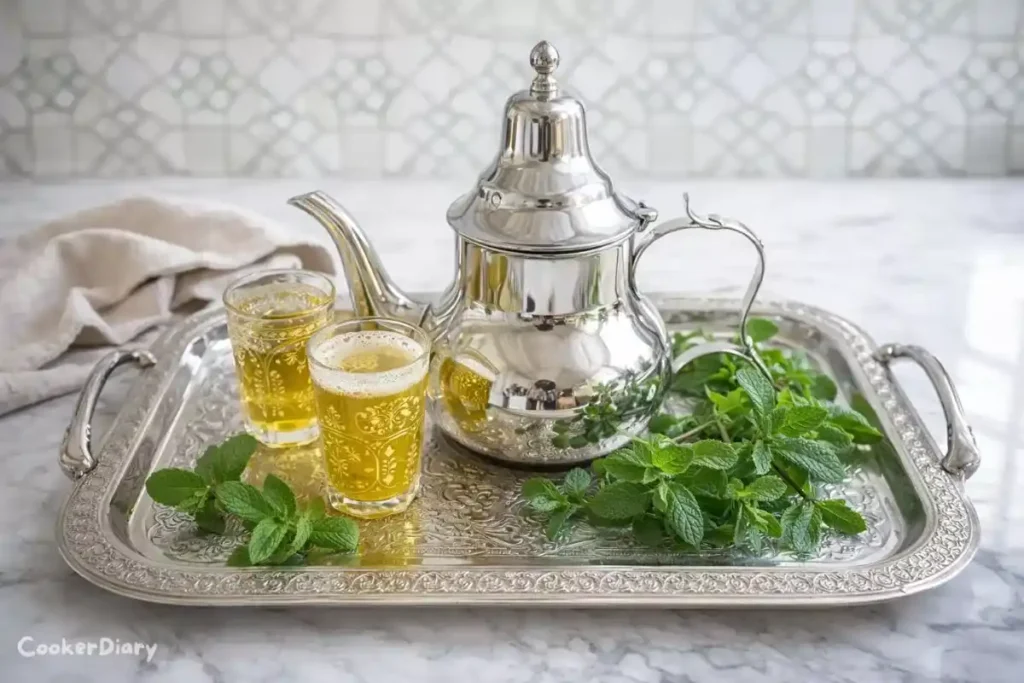
Moroccan tea is more than a drink; it is a ritual poured with pride and shared with intention. If you have ever been welcomed into a home in Morocco, you know that refusing a glass is almost unthinkable. The fragrance of fresh mint, the sweetness that surprises you at first sip, and the graceful high pour all work together to create an experience, not just a beverage.
Why This Moroccan Tea Recipe Works
Traditional Moroccan tea works because it respects history, technique, and balance. While many online recipes skip essential steps, this method keeps everything authentic and practical.
- It uses Gunpowder tea, the classic base imported from China since the 19th century.
- It explains the rinsing technique, which removes bitterness and improves flavor clarity.
- It balances sweetness and strength, instead of guessing measurements.
- It teaches the high-pour method that creates the signature foam.
- It uses fresh Mentha spicata for authentic aroma.
- It reflects the cultural importance of tea during gatherings and especially during Ramadan.
In addition, this recipe is beginner friendly. Therefore, even if you do not own a traditional teapot, you can still recreate the experience at home.
Traditional Moroccan Tea Recipe
Recipe at a Glance
| Prep Time | Cook Time | Total Time | Servings | Cuisine | Difficulty |
|---|---|---|---|---|---|
| 5 minutes | 10 minutes | 15 minutes | 4 small glasses | Moroccan | Easy |
Equipment: Amazon’s Overall Picks
- Traditional Moroccan teapot (stainless steel or silver style)
- Small Moroccan tea glasses
- Electric or stovetop kettle
- Long spoon
- Fresh herb scissors
Although a Moroccan teapot gives the most authentic result, you can use a small saucepan and a heatproof teapot if needed. However, pouring from height works best with a narrow spout.
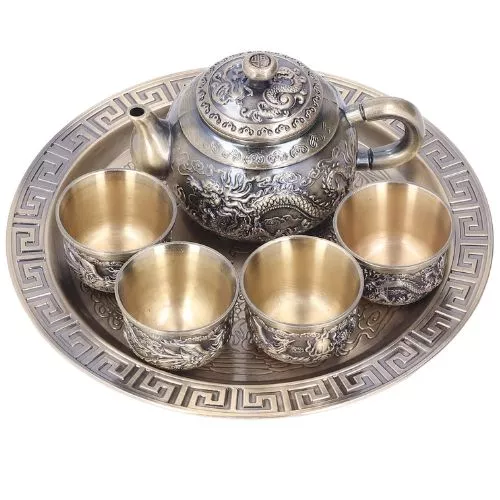
Turn every cup of Moroccan tea into a stunning cultural experience with the JTLB Exquisite Pattern Tea Set. Its vintage-inspired design, detailed metal relief, and complete serving tools make it perfect for entertaining guests or upgrading your table décor.
As an Amazon Associate, I earn from qualifying purchases, at no additional cost to you.
Moroccan Tea Ingredients
| Ingredient | Quantity | Purpose |
|---|---|---|
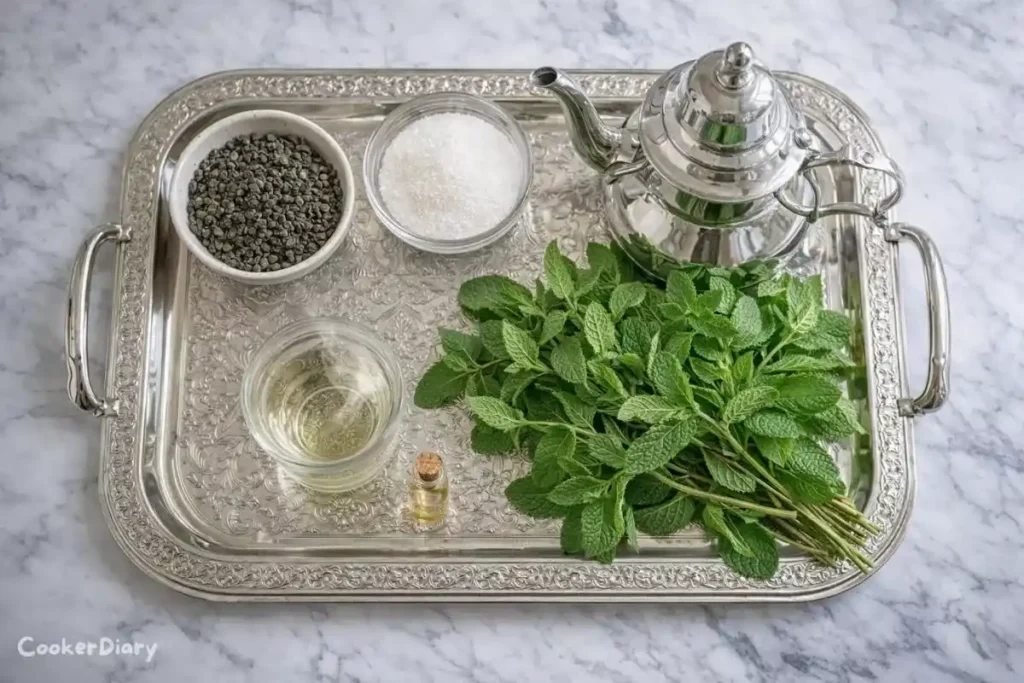
| Gunpowder green tea | 1 tablespoon | Strong tea base |
| Boiling water | 3 cups | Infusion |
| Fresh spearmint leaves | 1 packed cup | Aroma and freshness |
| White sugar | 4–6 tablespoons | Sweetness and balance |
| Optional: Orange blossom water | 2–3 drops | Floral note |
Ingredient Tips and Substitutes
- Always use loose-leaf green tea. Tea bags will taste weaker.
- Fresh mint is essential. Dried mint will not produce the same aroma.
- If you prefer less sugar, reduce it gradually. However, traditional Moroccan tea is intentionally sweet.
- For a winter variation, some regions add wormwood for a slightly bitter edge.
Step-by-Step Instructions
- Place the gunpowder green tea inside your teapot.
- Pour about ½ cup boiling water over the leaves. Swirl gently.
- Discard this first rinse to remove bitterness.
- Add sugar directly into the pot.
- Fill the pot with the remaining boiling water.
- Add fresh mint sprigs, including stems for deeper flavor.
- Let steep for 5 minutes.
- Pour one glass of tea and return it to the pot. Repeat twice to mix naturally.
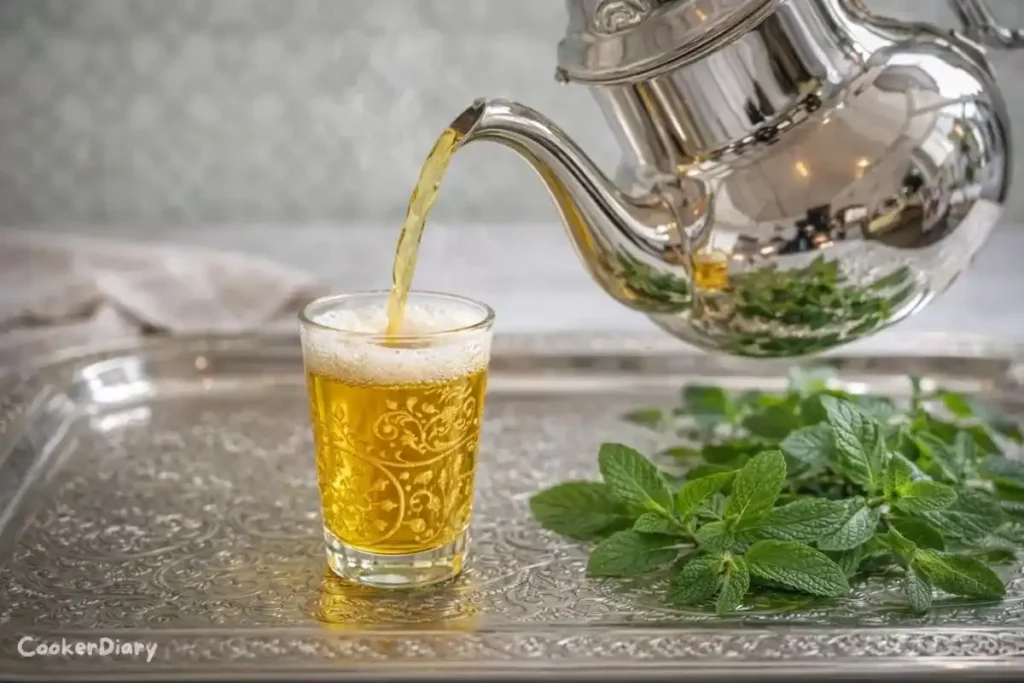
- Pour from a height of 8–12 inches into small glasses to create foam.
- Serve immediately.
Because aeration matters, the high pour is not just decorative. Instead, it cools the tea slightly and forms a light foam layer, which signals proper preparation.
Chef’s Tips and Variations
- Rinse the tea leaves first to avoid harsh bitterness.
- Use whole mint sprigs rather than chopped leaves.
- Never stir with a spoon after adding mint. Instead, mix by pouring.
- If the tea tastes too strong, add a splash of hot water rather than reducing mint.
- For guests, always serve at least three rounds. Traditionally, the first glass is strong, the second balanced, and the third sweeter.
- If you want a lighter version, reduce sugar by 25 percent without changing steep time.
In many homes in Fez, tea is served alongside pastries or nuts. Therefore, pairing it with almond cookies or dates enhances the full experience.
Discover more drink recipes:
- Classic African Tea Recipe
- Traditional African Coffee Recipe
- Pineapple Cranberry Juice Recipe
- Easy Brazilian Mounjaro Recipe
- How to Make Dairy-Free Hot Cocoa Mix at Home
Nutrition Information (Per Small Glass)
| Nutrient | Amount |
|---|---|
| Calories | 85 kcal |
| Carbohydrates | 21 g |
| Sugar | 20 g |
| Protein | 0 g |
| Fat | 0 g |
| Sodium | 5 mg |
| Caffeine | 25–35 mg |
Values vary depending on sugar quantity and serving size. If you reduce sugar, calorie content drops significantly.
Green tea itself contains antioxidants, which may support heart health. However, the high sugar content should be considered if you are monitoring intake.
Moroccan Tea FAQs
Moroccan tea, Atay, Chai, or Maghrebi mint tea, combines in usual Chinese gunpowder green tea, fresh spearmint leaves (naʿnāʿ), sugar, and boiling water. Some variations of Moroccan tea remove sugar and herbs. Traditionally, the tea is “washed” by briefly steeping and discarding the first water to reduce bitterness. Boiling water is poured from a height to aerate and create foam.
“Royal” Moroccan tea builds upon the classic base with premium gunpowder green tea and an exceptional blend of wild mints. It is often elevated with rare aromatic resins such as ambry myrrh, musk, or precious Calambac. Some versions incorporate orange blossom water, while others use lemon verbena, sage, or wormwood for complexity.
Yes, Moroccan tea offers several health benefits. The green tea provides antioxidants and polyphenols that protect against chronic diseases and reduce inflammation. Fresh mint acts as a digestive aid, soothing indigestion, nausea, and bloating. The combination also promotes relaxation, reduces stress, and boosts mental alertness. These benefits are greatest in sugar-free versions.
Moroccan tea is special because it represents hospitality, friendship, and cultural identity rather than merely a beverage. The ceremonial preparation—washing the tea, pouring from height to create foam—is an art form passed through generations. Traditionally served in three symbolic glasses (“gentle as life, strong as love, bitter as death”), it embodies a complete social ritual.
A Ritual Worth Mastering
Learning how to make Moroccan tea the traditional way connects you to a culture built on warmth and welcome. While the ingredients are simple, the technique transforms them into something memorable. Therefore, when you prepare it at home, you are not just brewing mint green tea; you are recreating a centuries-old ritual.
Once you master the rinse, balance the sweetness, and perfect the high pour, you will notice something interesting. Guests slow down. Conversations last longer. And a simple glass of tea becomes the center of the table.
As an Amazon Associate, Cookerdiary earns from qualifying purchases at no extra cost to you. Nutritional information is an estimate and may vary depending on ingredients, brands, and portion sizes used.