Moroccan Mint Tea Recipe
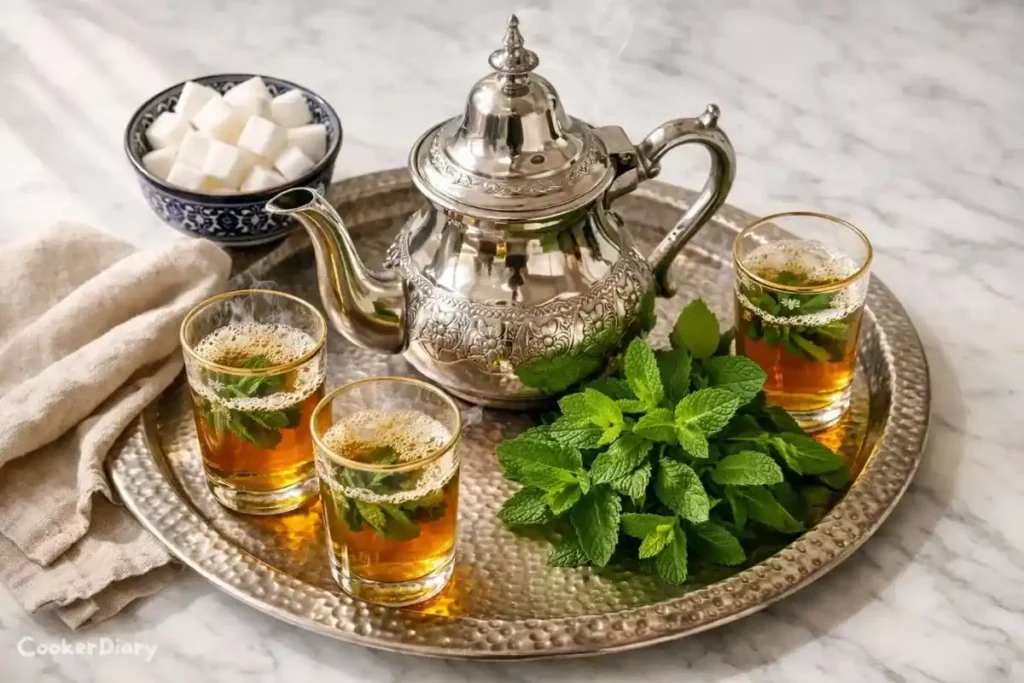
Moroccan mint tea recipe traditions begin with more than boiling water; they begin with intention. In Morocco, tea is not rushed. Instead, it is poured slowly, served proudly, and shared generously. I still remember my first glass in Marrakech. The tea was sweet, fragrant, and crowned with delicate foam. However, what stayed with me most was the feeling of being welcomed.
Why This Moroccan Mint Tea Recipe Works
This moroccan mint tea recipe works because it respects tradition while keeping the steps clear and practical.
- It uses real gunpowder green tea for bold depth and light smokiness.
- It includes the traditional rinse method, which removes bitterness.
- It balances sweetness and mint freshness perfectly.
- It explains the Moroccan pouring technique to create natural foam.
- It keeps steeping time controlled to prevent over-extraction.
- It follows authentic sugar ratios while allowing adjustment.
In addition, this method mirrors how tea is prepared daily in homes from Fez to rural villages. Therefore, you are not just brewing tea; you are recreating a ritual.
Moroccan Mint Tea Recipe (Authentic Atay)
Recipe at a Glance
| Prep Time | Cook Time | Total Time | Servings | Cuisine | Difficulty |
|---|---|---|---|---|---|
| 5 minutes | 10 minutes | 15 minutes | 4 glasses | Moroccan | Easy |
Equipment: Amazon’s Overall Picks
- Traditional Moroccan teapot (stovetop safe)
- Electric kettle or Stovetop Tea Kettle
- Heat-resistant tea glasses
- Loose leaf measuring spoon
- Fresh herb scissors
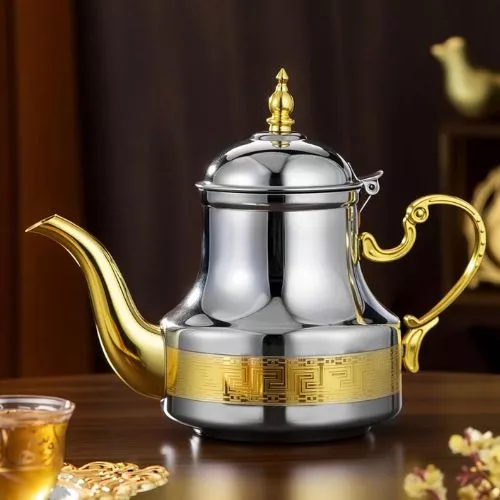
Elevate your Moroccan mint tea ritual with this 1.2L Arabic-style stainless steel Moroccan teapot. Designed for traditional tea service, it delivers the perfect pour for authentic foam and presentation. If you’re serious about making atay the traditional way, this is the teapot that completes the experience.
As an Amazon Associate, I earn from qualifying purchases, at no additional cost to you.
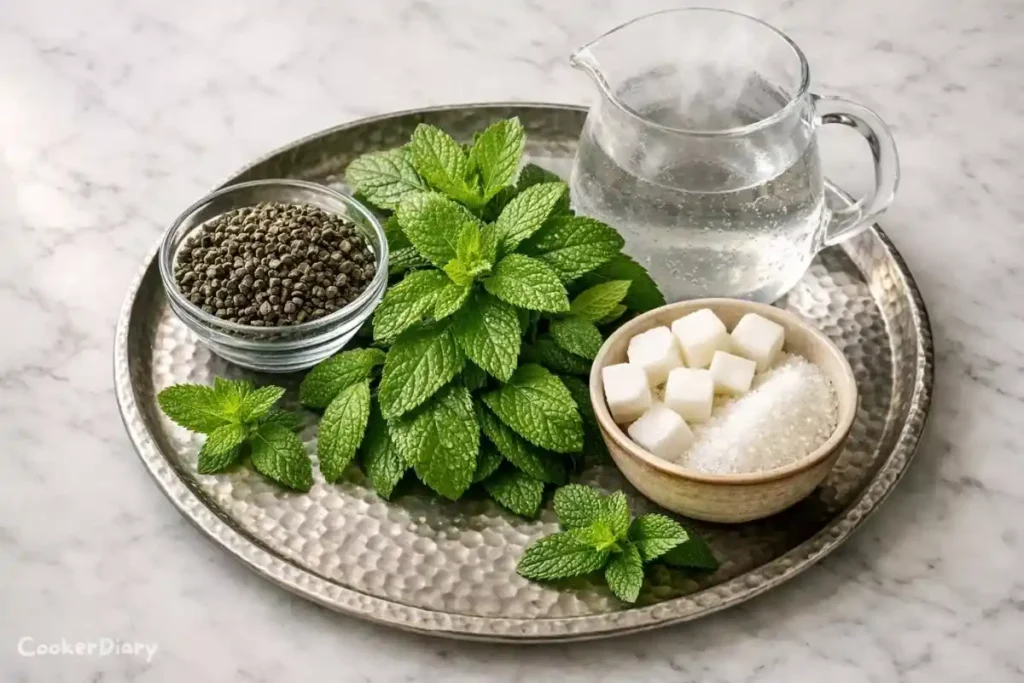
Moroccan Mint Tea Ingredients
| Ingredient | Quantity | Purpose |
|---|---|---|
| Gunpowder green tea | 1 tablespoon | Strong tea base |
| Fresh spearmint leaves | 1 packed handful | Aroma and freshness |
| Boiling water | 4 cups | Brewing liquid |
| White sugar | 2–4 tablespoons | Traditional sweetness |
| Extra mint sprigs | Optional | Garnish |
Ingredient Tips and Substitutes
- Use spearmint, not peppermint, for authentic taste.
- Adjust sugar gradually; traditional atay is sweet.
- Avoid tea bags because loose leaf gives better infusion.
- If unavailable, substitute with strong Chinese green tea.
Step-by-Step Instructions
- Boil fresh water separately.
- Place gunpowder tea in your teapot.
- Pour about ½ cup boiling water over the leaves. Swirl gently and discard the liquid. This rinse removes bitterness.
- Add sugar directly into the pot.
- Fill the teapot with remaining boiling water.
- Add fresh mint leaves generously.
- Let steep for 5 minutes without stirring.
- Pour one small glass of tea and return it to the pot. This mixes the sugar evenly.
- Pour into glasses from about 12 inches high to create foam.
- Garnish with mint and serve immediately.
The pouring technique is essential. Therefore, do not skip it. The height aerates the tea and forms the signature bubbles on top.
Chef’s Tips and Variations
- Pour confidently from height; hesitation reduces foam.
- Do not steep longer than 7 minutes to avoid bitterness.
- For lighter sweetness, reduce sugar slightly but keep mint generous.
- Add a splash of orange blossom water for floral aroma.
- In winter, increase tea quantity slightly for stronger flavor.
- Serve with Moroccan pastries or dates for authenticity.
If you prefer a modern twist, you can also chill the tea and serve it over ice. However, traditional Atay is always served hot.
Discover more Moroccan recipes:
- How to Make Moroccan Tea the Traditional Way
- Mediterranean Couscous with Vegetables
- Authentic Moroccan Chicken Tagine Recipe
- Sfenj: Moroccan Donuts Recipe
- Moroccan Harira Soup Recipe
- Easy Moroccan Zaalouk Recipe
Nutrition Information
| Nutrient | Per Serving (1 glass) |
|---|---|
| Calories | 70 kcal |
| Carbohydrates | 18 g |
| Sugars | 18 g |
| Fat | 0 g |
| Protein | 0 g |
| Caffeine | 30 mg |
| Sodium | 5 mg |
Green tea naturally contains antioxidants called catechins. However, the sugar content depends on how much you add. Therefore, adjust based on your dietary needs.
FAQs About Moroccan Mint Tea Recipe
Moroccan mint tea is made from Chinese gunpowder green tea, fresh spearmint leaves (naʿnāʿ), sugar, and boiling water. In winter, Moroccans sometimes add warming herbs like wormwood (shība) for bitterness or lemon verbena (lwiza) for citrus notes. The preparation involves “washing” the tea leaves with a small amount of boiling water first to reduce bitterness.
Unlike simple mint tea where mint is steeped alone, Moroccan mint tea steeps gunpowder green tea and fresh mint together in the same pot, creating a bold, layered flavor. It also features a ceremonial preparation style, including rinsing the tea leaves and pouring from a height to aerate and create foam. Traditional Moroccan tea is typically much sweeter than Western mint infusions.
Yes, it offers several health benefits. The green tea provides antioxidants and polyphenols that protect against chronic diseases and reduce inflammation. Fresh mint acts as a digestive aid, soothing indigestion, nausea, and bloating. The combination also promotes relaxation, reduces stress, and boosts mental alertness and memory. Moroccan mint varieties specifically contain high menthol and vitamin C, contributing to immune support.
Moroccans drink mint tea as a symbol of hospitality, friendship, and cultural identity rather than merely a beverage. The ceremonial preparation—washing the tea, pouring from height to create foam—is an art passed through generations. Traditionally served in three symbolic glasses (“gentle as life, strong as love, bitter as death”), it represents a complete social ritual offered to guests throughout the day.
Bringing Moroccan Hospitality to Your Table
Moroccan mint tea is more than a drink; it is a symbol of welcome. Therefore, when you prepare this moroccan mint tea recipe, you are sharing more than flavor. You are sharing tradition, patience, and generosity.
Whether you serve it after dinner, during Ramadan evenings, or on a quiet afternoon, this tea invites connection. Moreover, once you master the pouring technique, you will notice guests watching with admiration. That moment alone makes the ritual worthwhile.
In the end, authentic atay proves that simple ingredients can create extraordinary experiences. So boil the water, gather fresh mint, and pour with confidence. Your kitchen will smell like Morocco.
This post may contain affiliate links. As an Amazon Associate, I earn from qualifying purchases at no additional cost to you. Nutrition information is estimated and may vary depending on ingredient brands and sugar quantity used.